
I am not one trained in education, pedagogy, philosophy of education or any related field. Freire's book was a required read for my first class in that field. I found it an interesting read and worth some dialogue. Those of you trained in the field, here's my thoughts - don't hesitate to push back!
Paulo Freire’s short book
Pedagogy of the Oppressed
has shaped the field of education, specifically educational philosophy, since its publication in 1970. As D. Schugurensky observes, “There is ‘before’ and ‘after’ Freire, both in the philosophical approach to adult education, as well as in its practice.” Paulo’s educational philosophy has vast implications not only in the secular realm, and not only for Christian educators, but also for the church as an institution; thus, it is a work which must be engaged critically. That is the goal of this short exchange, to engage critically with Freire, asking which aspects of his educational philosophy should be accepted, which parts should be rejected, which can be modified, and how his work can/should shape the educational ministries of the Christian church.
This short interaction with Freire is organized is organized into four sections, each presenting a theme from Freire’s work alongside a more robust biblical alternative.
The Goal of Education: Transformation vs. Glorification Freire’s educational philosophy was born from his work with underprivileged, illiterate peasants in South America (which does make it challenging to translate his philosophy into a largely literate and privileged North American context) in which oppression was a tangible reality and Marxist ideas found fertile soul in which to grow. Freire understands that oppression leads to the dehumanization of both the oppressed and the oppressor. In many instances, oppressed people liberate themselves only to find that they have in turn become the new oppressors, and in most cases, the oppressed are also sub-oppressors. To escape this cycle and liberate both oppressor and the oppressed is to allow both to be more fully human, and requires that people develop a critical awareness of their reality so that “through transforming action they can create a new situation, one which makes possible the pursuit of a fuller humanity” (Freire, 47). This is the role of the educator – to work alongside the oppressed “to unveil the world of oppression and through the praxis commit themselves to its transformation”(Freire, 54) so that in time the liberation is a true and permanent setting free and all men are fully humanized.
What should the Christian make of this? Is liberation and humanization the end goal of education? Possibly, if we consider only the horizontal plane of the educational task. But the Christian educator must also me mindful of the vertical plane and our Godward responsibility. If liberation and humanization is the educator’s goal on the horizontal plane, doxology must be the goal on the vertical plane. Or, in other words, Freire’s philosophy accounts for the second table of the law in seeking to promote love for neighbor. But as Christian educators, we have a responsibility to the first table as well, to promote the love of God in the human heart. In this, Freire’s philosophy obviously comes up short. His philosophy begins with and ends with man and our responsibilities to man, not God. Thus, as a fully orbed philosophy of education, it must be rejected. However, as part of an educational philosophy that does not neglect our duties toward God, it has some promise. After all, it would be an equally critical error to neglect our duties on the horizontal plane, our duties to the second table of the law (cf. 1 John 4:20). Several key themes of Freire’s philosophy will be examined in this light.
The Method of Education: Banking vs. Problem-Posing EducationCentral to Freire’s educational philosophy is the distinction between “banking” and “problem-posing” approaches to the educational task. By banking, Freire means an approach to education that sees students as “containers” or “receptacles” to be filled with the knowledge the teacher possesses. The more knowledge a teacher can impart, the better teacher they are; the more a student can retain the better student they are. Freire contends that this approach drives a wedge, an untrue and oppressive wedge, between the student who supposedly knows little or nothing and the teacher who knows everything. Such an approach, contends Freire, is a tool in the hands of the oppressor by which they domesticate the student, teaching them to adapt to the situation rather than to change it (Freire, 74).
This oppressive form of education must be broken down and students as well as teachers must, according for Freire, come to see themselves as col-earners. Freire writes, “Those truly committed to liberation must reject the banking concept in its entirety (emphasis added)...They must abandon the educational goal of deposit-making and replace it with the posing of the problems of human beings in their relation with the world” (Freire, 79). He continues, “Whereas banking education anesthetizes and inhibits creative power, problem-posing education involves a constant unveiling of reality… [so that students] will feel increasingly challenged and obliged to respond to that challenge” (Freire, 82). The result is that students begin to see that reality is transformable and take up the challenge not only to transform themselves but their entire social context.
Two critical observations should be made. First, one should question whether Freire’s problem-posing pedagogy is even possible apart from some prior banking of information which he rejects in toto. Stephen Prothero recalls, “So when I finished graduate school and became a professor myself, I told students that I didn’t care about facts. I cared about having challenging conversations, and I offered my quiz-free classrooms as places to do just that. I soon found, however, that the challenging conversations I coveted were not possible without some common knowledge – common knowledge my students plainly lacked” (Stephen Prothero, Religious Literacy. New York: Harper One, 2007, pg. 5). Can a teacher lead a productive dialogue on, for example, how the Exodus serves as a paradigm for God’s liberating mission if students have no prior knowledge of the events of the Exodus?
Second, even if it’s good pedagogy, believers should ask if it’s Biblical, especially when applying it to the church and her educational ministries. Though we may take issue with the direction of transformation Freire proposes, we can certainly agree that the goal of the church’s educational ministry is real transformation and not winning The Annual All Church Bible Trivia Challenge. However, the quickest of surveys will lead the student of God’s Word to see that some degree of banking is important; there are certain people who know things and are tasked with conveying these things to others who do not know them. Deuteronomy 6:1-7 gives us two examples: Moses has been commissioned by God to teach the Israelites the commandments who were in turn instructed to pass their knowledge on to their children. The Great commission is another example where some people, namely the disciples, with certain knowledge, namely what Jesus taught, are commissioned to go to other and tell them what they would not otherwise know. Catechetical education, which is largely depositing information in a receptacle, has a place in the church. Once the true information has been learned, we must help people see how this truth transforms their existence and can be brought to bear on the reality they find themselves in.
Spiritual vs. Political/Economic OppressionThis brings us to another critique of Freire’s educational philosophy. While Freire speaks of oppression on nearly every page of his work, he sees it solely in terms of socio-political or socio-economic oppression. Freire speaks eloquently on the task of unveiling reality, exposing the currents within our structures that carry people along, debunking the myths that are perpetuated, and enabling people to become part of the process of overcoming their “limit situations”. Yet on a biblical analysis, Freire’s understanding of oppression is shallow in that it leaves off the most sinister oppressor – the sinful human heart. Were all structures of authority and resource distribution to undergo a thorough renovation and all forms of injustice rectified, human beings would still be horribly oppressed. Of course that is ridiculously hypothetical and upon a Christian viewpoint impossible, for hearts tainted by sin will not only oppress their owners, but will inevitably lead to oppressive systems as well.
Borrowing a page from Schaeffer, we can say to Freire, “Your philosophy is good so far as it goes, but it doesn’t go far enough.” Freire is correct in pushing educators to unveil the systems of oppression and currents that carry people along unconsciously in cooperation with those systems. For the Christian educator that means exposing the sinful streams of greed, pride, lust, etc., that run through every human heart and carries them along individually and unconsciously as well as and prior to unveiling how those streams carry us along and oppress us at the societal level.
Given Freire’s limited understanding of oppression, his limited understanding of education as primarily a political endeavor is understandable. However, those who have a deeper understanding of oppression will necessarily take a different view of the educational task, one that first addresses the inner spiritual oppression of sin, which is the fount of all other types of oppression we encounter.
Objects vs. Subjects of TransformationOne final critique must be made. Freire emphasizes throughout his work that educators must allow students to be full participants in the transformation of society in a more fully humanized one. Freire writes, “It is absolutely essential that the oppressed participate in the revolutionary process with an increasingly critical awareness of their role as Subject of the transformation” (Freire, 127). At one level, that works in the church as well as we call people to the task evangelism, to spread the good news of the kingdom of God, and to live out the gospel in concern for social justice.
On another level, however, it is completely hostile to the gospel. Freire loathes the idea that oppressed might be treated as “welfare recipients” or as objects of liberation rather than subjects who bring about their own liberation. While it is true that believers can contribute to their liberation from external social, political, and economic oppression, it is patently untrue that they contribute in any way to their liberation from their true oppressor, namely sin and guilt. The preaching of the gospel reminds us every week that we truly are recipients of welfare, that before we’re ever subjects of societal transformation, we are objects of God’s liberating work.
ConclusionCertainly other critiques are valid. For example, Freire’s understanding of truth as something constructed in dialogue rather than something the objectively exists has been rightly criticized. It would, however, be a mistake to dismiss Freire out of hand because of these shortcomings, massive though they are. When read through a biblical filter, there is still much that the church can learn from Freire. It is, after all, easy to turn people in our churches into passive receptacles of biblical information. Freire reminds us that in our teaching the retention of information is at best a penultimate goal. The truth we teach is a transformative truth, and we must treat it as such. Moreover, Freire rightly emphasizes that good teachers will lift the curtain on reality and reveal to people the forces that are working to subjugate them (John seems to be doing just that in the book of Revelation). Also, that this is often best done in dialogue where students and teachers come humbly ready to learn from each other can hardly be doubted. Other points of agreement could likely be found, but in the end Paulo Freire’s philosophy of education is too divergent from a truly Christian approach to education to be accepted on the whole.

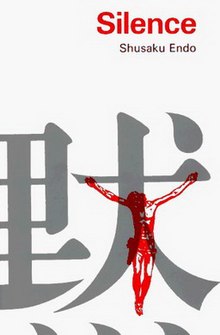

 Gene Edward Veith Jr's book,
  and
and  is a book I really want to recommend, but a book that is hard to recommend for a couple of reasons.

 That was the case with
  was the first of the three. Dr. Taylor gives useful advice to the Christian who wrestles with doubt. I wasn't necessarily a fan of all the parenthetical interuptions (Dr. Taylor's inner atheist giving voice to his skepticism), but the book was, to use and overworked phrase, a breath of fresh air.
  was the second book. It's shorter and more philosophical, but contains an interesting narrative (biographical?) that keeps the readers attention.
  is what it sounds like - a series of letters Dr. Taylor wrote to his children through the years in an effort to pass on wisdom, convey affection and continue a spiritual legacy. It's wins the prize (no monetary gift forthcoming, sorry) for my favorite book of the year.
 is a very helpful book. Through the book Kruger seeks to establish the validity and authority of the NT Canon from the text itself rather than merely looking to the early church, creeds/councils, etc. It is a theological case for the canon rather than a historical case. I smell a future seminar topic!
 was a very enjoyable introduction to seven great men and their faith. These certainly aren't deep, extensive biographies, but short introductions to the life and thought (like John Piper's The Swans are Not Silent series). The book includes one chapter on each of these seven men: George Washington, William Wilberforce, Eric Liddell, Dietrich Bonhoeffer, Jackie Robinson, John Paul II, and Charles Colson.
 was extremely helpful. It's not an easy read and can get a bit tedious, but I haven't read a better, more balanced approach to these texts yet.
 ,
I dare you. You won't be able to put it down. Anderson is a fantastic story teller and his characters, human and otherwise, are so interesting. Best series I've read in a very long time (and I'm not a sci-fi kinda guy).
,
I dare you. You won't be able to put it down. Anderson is a fantastic story teller and his characters, human and otherwise, are so interesting. Best series I've read in a very long time (and I'm not a sci-fi kinda guy).
 last week. I don't want to write a full review of it, and you probably don't want to read a long review of it either. But maybe a few quick thoughts.

 is truly thought provoking. Central to his treatment are the dual themes of divine ownership and divine gift. The land as divine gift lies at the core of God's promises to Abraham - there would be seed, land, and blessing. The land was far more important that we, as NT Christians, probably acknowledge. In many ways, the land would be a gauge within Israel of their relationship to God - it was given as an inheritance, which speaks of unique sonship. Moreover, removal from the land was the ultimate in threats and punishment, realized in the exile and subsequent return.
 , by J. Todd Billings. This book was an easy read with good practical reflection on what the doctrine of our union with Christ means for life and ministry. Maybe a little lean on exploration and explanation, but great on reflection. 175 pgs.
 , Robert Letham. This one makes a good companion to Billings as he doesn't reflect much on practical implications, at least not as richly as Billings. On the other hand, he explores different aspects of our union with Christ and does a good job Biblically. He does, however, skirt the debate on the priority of justification vs. the priority of union. 150pgs.
 , by Lewis Smedes. Smedes does a good job of explaining how the doctrine of our union with Christ has been formulated in different traditions throughout the history of the church. It's hard reading, and I think his faults are glaring. He seems to conflate the Spirit and the Son in unhealthy ways and is so anti-mystical I think he misses some important streams of truth. I'd stay away unless you really want to dive into the deep end. 250pgs.
 , by William Evans. I haven't tackled this yet, but it's on my list for this month, mainly because he interacts with Nevins and Hodge and explores their debate regarding the doctrine of union with Christ and how it plays out in the church. Not for those who want in intro to the beauty of this doctrine. 270pgs.
 , Donald Fairbairn. He was quoted so heavily in my class that I felt compelled to pick it up for myself. I appreciate any book that helps me explore doctrines through the eyes of the early church. I haven't opened it yet, and probably will only read the chapters that relate to my research, at least initially. 225pgs.
 , Julie Canlis. I'm really excited about this book. I haven't read it yet, but was introduced to Canlis' research through the class. Canlis seeks to 'place Calvin within the mystical tradition', which sound good to me! Starting it tonite! 250pgs.

 , David VanDrunen. VanDrunen offers a great overview of Biblical/Redemptive history, tracing how the covenants connect (and where there is disconnect). The book examines how Christians are called to live in this world as citizens of another. Great insights into how we keep the church about the church and still engage as individuals in the work of being salt and light. Also
  , by Jerry Bridges. I'm pretty sure this book has made previous lists. Remember, this isn't books that came out in 2011, but books I read, or reread, in the past 12 months. This is a great, very accessible book on the importance of 'preaching the gospel to ourselves'. I walked through it with my small group and really got a lot out of it again.
 , Ken Bain. This is one of those narrowly focused, skill building books I mentioned above, but, it was excellent. It's not a cookie-cutter approach to teaching, but offered great insight into the goals and best approaches of teaching. Also worthy of mention is Parker Palmer's
  , Cornelius Venema. Venema's book helped me 1) understand the controversial New Perspective on Paul championed by Sanders, Dunn and NT Wright; and 2) helped me understand its deep deficiencies. It's pretty dense, but if you've read Wright on Paul, pick this up as a counter argument before deciding Wright is right (can never resist that).
 , C. John Collins. This book will make a lot of people mad. On the fundamentalist side, Collins will infuriate people with his suggestions that the language of the Bible may be less than literal, but poetic, etc. Nor will the like how he entertains scientific theories about man's origins and deems them, many at least, compatible with what the Bible teaches. On the opposite extreme, others won't like his insistence that a literal Adam and Eve are necessary to story line of Scripture. Blogged about it more
  . This book actually had four essays with responses from four different contributors. It was a very thoughtful and thought provoking book. I don't think I agreed with one essay in total. I certainly agreed with the most strident egalitarian in the mix, Linda Belleville, and the most strident complimentarian too, Tom Schreiner. In the middle, I found a lot to agree with from both the moderate complimentarian (Craig Blomberg) and moderate egalitarian (Craig Keener).
  , John Dyer. Ok, truth time - I haven't finished it yet, but I hope to by Jan1! Unless Dyer gets real stupid in the last third of the book, I would highly recommend it to anyone who uses technology. Yet, that's you! He helps the reader consider how technology shapes us just by using it, whether for good or evil purposes. Moreover, he explores how God has utilized technology to further his redemptive purposes in the world.
  , by WEB Griffin. To make it a perfect ten, I needed to include this awesome series of war novels. I started this series at the tail end of 2010, but read five of the six in 2011. It's a great fictional series on the founding of the CIA, called the OSS in its early days. It traces the work of one particular team in Argentina during the tail end of WW2 and into the Cold War. Fantastic!
 , about "the redeeming and corrupting power of technology". I'm less than half way through the book, but it's certainly made me think, especially about how my use of technology is shaping me, not just the world around me. For example, I know (and am convicted by) how easily distracted I am by my phone. Wrestling with Luke, talking with Lynn, on the ball field with the boys - it's hard to ignore the 'bing' of my phone telling me I've got an email or text. I'll think and write more on that later. This post is about God's use of technology to advance his story.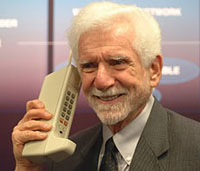


 ).
).