Friday, January 30, 2015
Biblical Reasons to Doubt the Creation Days were 24 Hour Periods
Here's the points, but visit his site for the whole article.
1. Genesis 1:1 describes the actual act of creation out of nothing and is not simply a title or summary of what follows.
2. The earth, darkness, and water were created before 'the first day'
3. The seventh 'day' is not 24 hours long
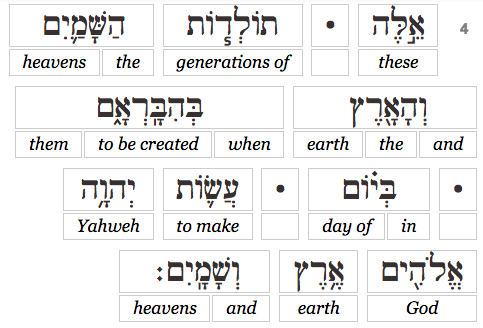
4. The 'day' of Genesis 2:4 cannot be a 24 hours long
5. The explanation of Genesis 2:5-7 assumes more than an ordinary calendar day
Taylor writes, "God is portrayed as a workman going through his workweek, working during the day and resting for the night. Then on his Sabbath, he enjoys a full and refreshing rest. Our days are like God’s workdays, but not identical to them. How long were God’s workdays? The Bible doesn’t say. But I see no reason to insist that they were only 24 hours long."
There's the key - don't insist on something the Bible doesn't insist on; don't force others to believe something you may believe, but isn't required biblically.
Monday, November 05, 2012
Fantasy Kills Imagination (and Hurts the Church)
Miller writes,
I’m capable of living almost exclusively in my mind. I can walk and daydream for hours. But some of these daydreams haven’t proved helpful. And the ones that aren’t helpful are daydreams about my own glory.
When it comes to the church, I have dreams. Some are great ones - dreams of the church changing the town I live in through service, dreams of the college ministry making a significant impact on the darkness surrounding the campus, dreams of revival, of lives changed. I can sit in prayer over these dreams and be brought to tears. They are good dreams. But, they're not the only daydreams I have. Too often I catch myself practicing to be a fool - imagining its my sermon that sparks the revival and my name gets spoken generations from now in the same sentences as Edward or Whitfield. I dream that a book I want to write will become a classic (with dust-jacket blurbs written by the 'big guns' in the Reformed academic community). These self-focused daydreams may get in the way of the bigger dreams, or at least render me unfit servant for their accomplishment.C.S. Lewis delineated between the two in his book “Surprised by Joy.” In the book, he talks about his early days imagining “Animal Land” which was a world he made up with his older brother. The time he spent imagining Animal Land, he noted, was great practice for becoming a writer. But fantasies about his own glory, he noted, (he would often spend time fantasizing about being a good dancer) was only practice for becoming a fool.
I remember hearing years ago that as we mature, we move from focusing solely on what we do (behavior/goals) to how we do it (means) to why we do it (motives). I'm praying that God will truly expose self-serving motives. I doubt I'll be able to set them aside entirely - not this side of Christ's return. I will pray, however, that God will use me despite my being a bag of mixed up motives and self-centered imaginings.
So, where does your mind run as you daydream?
Monday, May 14, 2012
Toxic Idea #1
For the summer I'm leading the Connexion study on "Toxic Ideas" - ideas/presuppositions we've swallowed, often knowingly and usually uncritically. Last Thursday we looked at the idea prevalent in our iPhone obsessed culture that newer is always better, thinking through several key passages that command us to remember and hold onto the past and the Tradition we've been entrusted with.
I'm not going to recap, but a blog I frequent has started a series on the importance of knowing some church history, so I thought I'd link to it.
Introduction to Ten Reasons to Study History & Reason #1: the nagging sense that no one has dealt with these issues before
Reason #2: It will curb the arrogance of the present
Thursday, November 17, 2011
Ethics, Church & Undocumented Workers
I appreciate, though don't always agree, with Dr. Moore of SBTS. He posted this on his blog a couple of days ago - it's the final exam question for his ethics class. In light of the focus of this years Missions Conference at ECC, I thought it would be a good thing to consider some more. I'll offer my thoughts on this next week (as well as more thoughts on the implications of Natural Law like a promised). Offer your thoughts!You find yourself far away from this ethics class, twenty years from now in your ministry, serving a church in south Florida. Pablo is a man you met, with his wife Hannah, after they attended a small-group Bible study in the home of a family in your church. Both of them, after hearing you explain the gospel, were convicted of sin and, after several weeks of conversation, both announced they were ready to confess Jesus as Lord and to follow him in baptism.
Before the baptism, though, Pablo approaches you to say that he’s not sure he meets the requirements for Christian baptism. He’s not sure he’s a repentant sinner. He sees himself as guilty, he is sorry for his sins against God and others, and he wants the forgiveness that comes through Jesus’ bloody cross, the new life that comes from Jesus’ empty tomb.
But there’s something that kindles fear in him.
Pablo tells you he is an undocumented worker, what some would call an “illegal immigrant.” Years ago he left conditions in El Salvador that, due to famine there, led him to near starvation. Moreover, he worked, like others in his village, for a multinational plantation where he was physically beaten and sexually abused. There were no other options for him, as the only employers in the country were made up of similarly exploitative companies. He slipped into this country undetected and has since lived with an artificial Social Security number he purchased on the black market, enabling him to work in this country.
Pablo’s employer knows his immigration status, but operates with a “don’t ask/don’t tell” policy when it comes to such questions about his workers. Indeed, several outside financial consultants say that, without such labor, this employer’s business would be financially unfeasible and would have to close, since there is not a sufficient employee base among native-born Americans willing to work in such a job.
The employer is Tyler Rogers, also a member of your church, one of your most Christlike people in the congregation, and he teaches the Bible in a large Tuesday night small group. It was at his family’s house that you met Pablo and Hannah, since he had been sharing the gospel with them for months and inviting them to hear more through your church.
The United States immigration policy is, if anything, more restrictive than it was when you were in ethics class at Southern Seminary. No longer can a green card be obtained by marrying a U.S. citizen, so Pablo’s marriage to Hannah is irrelevant to his immigration status. According to current law, if Pablo turns himself in, or is caught, he will face immediate deportation to El Salvador, along with a penalty making him ineligible to apply to entrance to the United States for no less than ten years.
Moreover, returning to El Salvador and applying for immigration is a process that takes, in the best of scenarios, ten years from start to finish. An admission of illegal status, plus a return to El Salvador, would mean crushing poverty, possible starvation, and almost certain bodily harm in dangerous working conditions. It would also mean being separated from Hannah for ten to twenty years.
Pablo and Hannah have three children: an eleven year-old girl, a six year-old boy, and a two year-old girl. Hannah is also pregnant with their fourth child, due next Spring.
Pablo has, since arriving in the United States, been sending a portion of his paycheck back to El Salvador, to his elderly mother who is caring for Pablo’s nieces and nephews since Pablo’s brother was killed due to the unsafe working conditions in the factory and his brother’s wife abandoned the children. Without this money, Pablo fears the children, two of whom are babies, and his mother would starve to death.
Pablo wants to do what Jesus would have him to do, to be a godly man. What do you advise him to do? If you advise him to turn himself in or to return to El Salvador, how do you square that with the biblical mandate that one who “does not provide for his own, and especially for those of his household, has denied the faith and is worse than an unbeliever” (1 Tim. 5:8)? Can you really, from that point forward, consider yourself “pro-family” or “pro-orphan” or even “pro-life”?
If you advise him to stay with his family, how is he keeping the biblical mandate to “obey the governing authorities” (Rom. 13:1)? How also is he avoiding the sin of bearing false witness, about himself and his legal status? Can you baptize Pablo? After all, is he really showing repentance from sin?
What do you do or say, if anything, about Tyler and his employment practices? If nothing, then why not?
How do you equip the congregation to understand how to deal with this situation, and what implications does it have for how you respond to the mission field where God has placed you, with a large and growing community of undocumented Latin American workers, many of whom need to hear and believe the gospel, and are watching how you respond to this family.
Walk through each step of ethical reflection, showing why you reject some options and why you embrace others. Ground your answer in Scripture, the gospel, the Christian tradition, natural law, and common grace. Think through the implications of your answer in each situation for unintended consequences, and show how those can be ethically resolved.
Thursday, July 28, 2011
Did Adam And Eve Really Exist? (Email Exchange)
Wednesday, April 20, 2011
Putting to Rest Several Strawwomen
From the conclusion:
Read the whole thing here.Are there people who would like nothing better than to turn Dora into a doormat, Danielle into a dipstick, trap Kathy in the kitchen, insist that Bertha pop out more babies, and repress Rita? Yes, sadly there are. And I am the first in line to call them to account. But to say that these caricatures accurately represent the views of complementarians is like saying the Unabomber accurately represents the views of environmentalists. So please stop doing it!
Thursday, February 10, 2011
Two Provocative Posts from DG Hart
Today, he posted about an impending suit brought by seven higher education groups. An Appeals Court has recently sided with Badger Catholics in their complaint against the University of Wisconsin. The University had denied funding to the Catholic student group from student fees, but this
Hart goes on to raise several questions about this situation:
Is that what they really want to say, that religion is the same as politics, sexual orientation, debate, and chess, or whatever other cause or identity for which Wisconsin students organize? Of course, it might seem unfair for Christian groups not to receive funding that goes to other students, but is this really a hardship worthy of hiring lawyers and going all the way to the Supreme Court? I imagine that all the attorneys fees could have funded Badger Catholic for a decade at least and probably several masses for dead Badger Catholics along the way... Meanwhile, is it really too much to ask for Christians to support their own activities? If believers can readily acknowledge the unfairness of being taxed to support indecent art funded by the National Endowment for the Arts, can’t they also understand why Wisconsin students and administrators might object to Protestants receiving funds to conduct Bible studies?
We certainly are quick to cry foul in similar situations, aren't we.
In another piece from earlier in the week, Hart asks, "How much of the Bible do we want the President to apply in his ruling? He offers the following thought experiment.
"[Imagine President Obama] comes to the conclusion that murder is absolutely wrong and that abortion in many cases seems to be at odds with God’s law. He calls for a meeting of his cabinet to address the matter, calls the Speaker of the House about drafting legislation, and may even decide to address the nation during prime time."
Ok, sound good right. But Hart continues the experiment. Now imagine President Obama continued reading and read the New Testament.
"So let’s say the President continues to read the Bible daily and comes to the conviction, after counsel from nearby pastor, Mark Dever, that infant baptism is sinful. He knows that many churches, both Roman Catholic and Protestant, practice infant baptism. But he still believes that God’s word teaches only people who have made a credible profession of faith are eligible for baptism. So he calls another round of meetings with cabinet officials, members of Congress, and church leaders to begin to draft legislation that would prohibit infant baptism. Let’s also suppose that he gave the churches a year to stop their practices and if they did not the government would shut down all congregations that still used a baptismal font.
This scenario is not so hard to imagine since Presbyterians in Scotland and Northern Ireland experienced from Oliver Cromwell the kind of repression that President Obama might visit on Reformed churches if he got evangelical religion."He concludes, "it does seem mightily selective to think that magistrates need to pay attention to sexual sins but need to mind their business when it comes to liturgical infidelity. "
I'm pretty sure Hart isn't saying we should stop lobby for life (at least as individuals). However, he raises good questions regarding how we should lobby and argue. Should we use Scripture when debating with people who do not regard Scripture as authoritative? Or, should we argue from grounds of common grace and general revelation. Do we really want the President to run the country from a Christian platform? If so, which one? The pacifist Anabaptist position? The radical right or the liberal left? Or, should we recognize that we live as dual citizens and keep the two kingdoms separate. Good questions to ponder.
Thursday, January 27, 2011
Care about what people think?
There is a tension in the Bible on this. Ultimately, we are to care first and foremost what God thinks of us not not strive to please men or earn their admiration. On the other hand, we are to work to keep a good reputation with our neighbors so as to earn a hearing for the gospel (or at a minimum, not cast disrepute on the gospel). Exploring this tension would be a worthy post, but not for today.
Instead, I want to explore how our preoccupation with others opinions of us is a hateful thing. Our caring so much about what others think is not a loving way of relating to others. Let me explain, and to do so I'll end up quoting large chunks from an article I found today about Facebook and how it makes us - especially women, it seems - sadder and lonelier.
A study at Stanford began when a PhD student in psychology noticed that people seemed to feel lousy after spending time on Facebook. Why? He explains, "They were convinced that everyone else was leading a perfect life." The article continues,
"Facebook is, after all, characterized by the very public curation of one's assets in the form of friends, photos, biographical data, accomplishments, pithy observations, even the books we say we like. Look, we have baked beautiful cookies. We are playing with a new puppy. We are smiling in pictures (or, if we are moody, we are artfully moody.) Blandness will not do, and with some exceptions, sad stuff doesn't make the cut, either. The site's very design—the presence of a "Like" button, without a corresponding "Hate" button—reinforces a kind of upbeat spin doctoring.
"Any parent who has posted photos and videos of her child on Facebook is keenly aware of the resulting disconnect from reality, the way chronicling parenthood this way creates a story line of delightfully misspoken words, adorably worn hats, dancing, blown kisses. Tearful falls and tantrums are rarely recorded, nor are the stretches of pure, mind-blowing tedium. We protect ourselves, and our kids, this way; happiness is impersonal in a way that pain is not. But in the process, we wind up contributing to the illusion that kids are all joy, no effort. " [emphasis added].
Facebook oneupsmanship may have particular implications for women. As Meghan O'Rourke has noted here in Slate, women's happiness has been at an all-time low in recent years...'The increased opportunity to succeed in many dimensions may have led to an increased likelihood in believing that one's life is not measuring up.' ... women may be particularly susceptible to the Facebook illusion. For one thing, the site is inhabited by more women than men, and women users tend to be more active on the site, as Forbes has reported. According to a recent study out of the University of Texas at Austin, while men are more likely to use the site to share items related to the news or current events, women tend to use it to engage in personal communication (posting photos, sharing content "related to friends and family"). This may make it especially hard for women to avoid comparisons that make them miserable. (Last fall, for example, the Washington Post ran a piece about the difficulties of infertile women in shielding themselves from the Facebook crowings of pregnant friends.)
The conclusion to the article, I think, is good:"Jordan, who is now a postdoctoral fellow studying social psychology at Dartmouth's Tuck School of Business, suggests we might do well to consider Facebook profiles as something akin to the airbrushed photos on the covers of women's magazine. No, you will never have those thighs, because nobody has those thighs. You will never be as consistently happy as your Facebook friends, because nobody is that happy. So remember Montesquieu, and, if you're feeling particularly down, use Facebook for its most exalted purpose: finding fat exes."
Ok, so here's my thing. By posting these 'airbrushed' portraits of ourselves, our careers, our marriages, our kids - our whole lives, we are giving our friends the impression that this is the way our life is. And, by so doing, we make others feel bad that their life doesn't measure up. That's not loving. Even if it were try, it would not be good to flaunt all our success in front of people. And it's not true. The cute video I posted of Luke dancing was 1:30. It was fun, adorable, and preceded by an hour or so of refereeing arguments between him and his brothers, frustration at dinner trying to get him to sit in his seat and eat...you get the idea.
I'm not at all saying we should stop posting witty updates or cute photos, but maybe we should offer a little more transparency into the tough parts of life too.
Russell Moore has pointed out how the 'happy-happy' culture of our churches can have the same effect. He argues, "By not speaking, where the Bible speaks, to the full range of human emotion—including loneliness, guilt, desolation, anger, fear, desperation—we only leave our people there, wondering why they just can’t be “Christian” enough to smile through it all." He continues,
"Nobody is as happy as he seems on Facebook. And no one is as “spiritual” as he seems in what we deem as “spiritual” enough for Christian worship. Maybe what we need in our churches [and on our Facebook walls] is more tears, more failure, more confession of sin, more prayers of desperation that are too deep for words.
Maybe then the lonely and the guilty and the desperate among us will see that the gospel has come not for the happy, but for the brokenhearted; not for the well, but for the sick; not for the found, but for the lost.
So don’t worry about those shiny, happy people on Facebook. They need comfort, and deliverance, as much as you do. And, more importantly, let’s stop being those shiny, happy people when we gather in worship. Let’s not be embarrassed to shout for joy, and let’s not be embarrassed to weep in sorrow. Let’s train ourselves not for spin control, but for prayer, for repentance, for joy."
Tuesday, December 07, 2010
A Conference I'll be Skipping
Providential History Festival Promo from ProvHistory on Vimeo.
Nope, don't think I'll be attending. Besides the hokeyness of it, it's promoted by the Chalcedon foundation - a "Christian educational organization devoted to research, publishing, and promoting Christian reconstruction in all areas of life." Sound good, but not so much. Here's a little more (from Wikipedia - not always the best source, to be sure):"In presenting a theonomic view of biblical law, the foundation is often referred to as promoting theocracy and dominionism. According to the group's web site:
We believe that the whole Word of God must be applied to all of life. It is not only our duty as individuals, families and churches to be Christian, but it is also the duty of the state, the school, the arts and sciences, law, economics, and every other sphere to be under Christ the King. Nothing is exempt from His dominion. We must live by His Word, not our own.
The Chalcedon Foundation has been listed as a hate group by the Southern Poverty Law Center."
Certainly Rushdoony, the founder, held pretty strong racist views. Besides that, he looks like Count Dooku!
Zombies are on the Move
Russell Moore writes a blog on Christian Ethics that I frequent. This past week he posted about why zombies are making a comeback in American entertainment, engaging with an article in the Times, My Zombie, Myself: Why Modern Life Feels Rather Undead, by Chuck Klosterman. Klosterman contends,
"The main truth about zombies, he argues, is that zombies, dead as they are, keep coming. As soon as you “kill” one dead man, there’s another right behind him. “In other words, zombie killing is philosophically similar to reading and deleting 400 work emails on a Monday morning or filling out paperwork that only generates more paperwork, or following Twitter gossip out of obligation, or performing tedious tasks in which the only true risk is being consumed by the avalanche.”
Moore goes beyond Klosterman,
"I think there’s more to it than Klosterman’s technological overload scenario. The zombie represents what it means to feel dead and yet unable to stop living. That’s, at root, a spiritual condition before it’s a sociological one. Those familiar with the Christian story know that the primal human sin brought about the sentence of death. What we don’t often note is that this death penalty was itself radically gracious. After joining the serpent in his insurrection against God, the man and the woman were spiritually cut off from the life of God. They were dead. God exiled them from the Garden of Eden not because he was spiteful toward them, but to get them away from his appointed means of their ongoing life, the Tree of Life. God sent the sinful humanity out of the sanctuary “lest he reach out his hand and take also of the tree of life and eat, and live forever” (Gen. 3:22)."
The whole thing is worth a read. Oh, and a note on the pic - I couldn't find a good zombie pic, so I found one of Lynn's ex-boyfriend. Remarkable resemblance!
Tuesday, November 09, 2010
The best news I've heard (since I heard coffee helps fight gout)
"Twinkies. Nutty bars. Powdered donuts.
F
His premise: That in weight loss, pure calorie counting is what matters most -- not the nutritional value of the food.
The premise held up: On his "convenience store diet," he shed 27 pounds in two months.
For a class project, Haub limited himself to less than 1,800 calories a day. A man of Haub's pre-dieting size usually consumes about 2,600 calories daily. So he followed a basic principle of weight loss: He consumed significantly fewer calories than he burned.
His body mass index went from 28.8, considered overweight, to 24.9, which is normal. He now weighs 174 pounds.
But you might expect other indicators of health would have suffered. Not so.
Haub's "bad" cholesterol, or LDL, dropped 20 percent and his "good" cholesterol, or HDL, increased by 20 percent. He reduced the level of triglycerides, which are a form of fat, by 39 percent.
"That's where the head scratching comes," Haub said. "What does that mean? Does that mean I'm healthier? Or does it mean how we define health from a biology standpoint, that we're missing something?"
"I'm not geared to say this is a good thing to do," he said. "I'm stuck in the middle. I guess that's the frustrating part. I can't give a concrete answer. There's not enough information to do that."
Two-thirds of his total intake came from junk food. He also took a multivitamin pill and drank a protein shake daily. And he ate vegetables, typically a can of green beans or three to four celery stalks.
Blatner, a spokeswoman for the American Dietetic Association, said she's not surprised to hear Haub's health markers improved even when he loaded up on processed snack cakes.Being overweight is the central problem that leads to complications like high blood pressure, diabetes and high cholesterol, she said.
"When you lose weight, regardless of how you're doing it -- even if it's with packaged foods, generally you will see these markers improve when weight loss has improved," she said.
"There seems to be a disconnect between eating healthy and being healthy," Haub said. "It may not be the same. I was eating healthier, but I wasn't healthy. I was eating too much."
He maintained the same level of moderate physical activity as before going on the diet. (Haub does not have any ties to the snack cake companies.)
To avoid setting a bad example for his kids, Haub ate vegetables in front of his family. Away from the dinner table, he usually unwrapped his meals.
"I wish I could say the outcomes are unhealthy. I wish I could say it's healthy. I'm not confident enough in doing that. That frustrates a lot of people. One side says it's irresponsible. It is unhealthy, but the data doesn't say that."Friday, October 15, 2010
Too Missional?
He goes on to offer some good thoughts/concerns:
(1) I am concerned that good behaviors are sometimes commended using the wrong categories.
(2) I am concerned that in our new found missional zeal we sometimes put hard “oughts” on Christians where there should be inviting “cans.”
(3) I am concerned that in all our passion for renewing the city or tackling social problems we run the risk of marginalizing the one thing that makes Christian mission Christian: namely, making disciples of Jesus Christ.
Read the rest and then his clarifications here.
Thursday, September 23, 2010
Great Video and an Important Lesson
What's so weird about this speech is how the passion and intensity rise at weird moments. He's excited. Ok, that's good. but he's running for treasurer! And he emphasizes odd things - like 'MA in COMMUNICATION', and Albert Einstein and 'INFESTATION'.
Wonder if we, as Christians, can learn something here. Does our emphasis fall on the right places - like the death, burial and resurrection of Christ. Or, does the emphasis fall on odd places - like our political values, eschatological visions, views of manhood/womanhood, etc. Ok, really, I'm just trying to find a reason to post the video.
Friday, September 03, 2010
Two Kingdoms
Kim Riddlebarger has a great post on living in the two kingdoms. It's clear, and it's relatively short. This is a critical distinction, as Dr. Riddlebarger points out. If we don't get it and confuse the two kingdoms, it quickly leads to 1) social gospel liberalism, or 2) some type of theonomy. Here's a preview:
Christ's Kingdom
Christ’s kingdom is manifest on earth through the ordinary means of grace and through those biblically mandated activities of the church (i.e., evangelism, discipleship, and diaconal ministries)
The Civil Kingdom
The civil kingdom is manifest in all human cultural endeavors and governing institutions. In the civil kingdom, Christian citizens seek to be salt and light as they fulfill their callings and vocations along with their non-Christian neighbors
------------------------------------------------------------------------------------------
Christ's Kingdom
As citizens of Christ’s kingdom, we live under the authority of Christ as revealed in Scripture (special revelation)
The Civil Kingdom
In the civil kingdom, we live under the authority of the laws of the land (i.e., general revelation and natural law)
Saturday, August 21, 2010
You look silly when you cry in class...
First, his courage. H
Second, he was brilliant in a way that I'll never be because 1) I'm not that smart, 2) I'm lazy compared to him. He was competent in philosophy, and Biblical Theology, a good exegete, and a popular author. In fact, his brilliance won friends out of enemies. Harnock, the arch liberal of the time, was impressed by him and considered him a friend. Students who once mocked him flocked to his classes after his reputation for scholarship and joy were established. (His classes were often over 125 students). He wrote a ton as well - some very technical stuff, but also popular devotionals. Hearing about a man that was nearly omnicompetent is really humbling when I consider myself barely competent in a few fields, and incompetent in so many.
His life backed up his warm theology. Towards the end of his life, after his wife died, it was said you could still hear him singing hymns to himself every morning. He was a steady rock. He taught for 100 semesters continuously without a sabbatical before he retired. Even after forced retirement at 70, he taught as an emeritus professor. He set aside an hour a day to meet with students one on one - unheard of in the German university system. He had open meetings once a week (with cigars) where students from different fields could come and talk about the Bible, or what it mean to be a Christian doctor, etc.
His seriousness. In the last years of his life he read and reread all his books, repenting of mistakes, wondering what he would have to give an account of before the judgment seat.
Tragedy. He lost his son in WW1. Many of his students died in that war, and many more in WW2. The loss of his son (and wife) sent him into depression and his writing nearly ceased for several years.
I'm looking forward to reading and writing more on him. I do recommend the audio by Yarbrough. I'll post later some more on my week, which was great and exhausting.
Wednesday, July 28, 2010
Tougher to be a Christian in a University This Week
First, in MI, Julea Ward lost her law suit against EMU. She was expelled from the graduate program in counseling because of her views on homosexuality. From the Catholic News Agency article:
"Julea Ward enrolled in the university's counseling practicum course in January 2009, and was assigned to a client who sought assistance with a homosexual relationship. Ward considered herself unable to assist the client under the circumstances, due to her own moral and religious beliefs, and was advised by her supervisor to reassign the client. Eastern Michigan University, however, responded to the situation by initiating disciplinary procedures against Ward, involving a “remediation” program. According to ADF, the “remediation” amounted to an ultimatum: Ward would either “see the error of her ways” and change her beliefs about sexual morality in order to encourage her clients in same-sex relationships, or be dismissed from the counseling program."
You can also read about Julea's case and reaction to her suit being dismissed in this FoxNews article.
A very similar case is before the courts in GA. Jennifer Keeton was also dismissed from a graduate program in counseling for her views on homosexuality. She was told that she would need to undergo a remediation program and sensitivity training. Going through the programs, however, wouldn't be enough - she would have to write a paper on how her views have changed. You can read about Jennifer's case in the Chronicle of Higher Education and also in this FoxNews article.
In both the above cases, it's not just the school policy that is in conflict with the Christian views of sexuality and causing problems for these students, it's also the Code of Ethics for the American Counseling Association.
Another case involving a university, religion, homosexuality and academic freedom is unfolding in Illinois where a professor of Catholic studies was ousted for sharing the Catholic Church's view on homosexuality. Kenneth Howell, an adjunct associate professor (whose salary is paid for by the local Catholic diocese!) was fired after explaining in a class and in a subsequent email why the Catholic Church believes homosexuality is a sin. Howell taught two classes on the UI campus - Introduction to Catholicism and Modern Catholic Thought. I'm not sure in which class the discussion came up, but it was a class on Catholicism, and he was explaining the Catholic Church view (which is also, coincidentally, his own)! How's the classified add going to read for his vacant job: "Wanted: professor who knows what Catholic's believe but doesn't believe it himself." You can read about Howell's case in the Chicago Tribune and in the News Gazette.Anyway, some important legal stuff to keep an eye on. The cases really make me appreciate 1) Christian universities, and 2) those faithful Christians who enter the secular university knowing the challenges.
Monday, June 21, 2010
My Thoughts on Al Mohler on the Age of the Earth
Mohler began by saying that there are really only two options for us to follow when we seek an answer: either the world is, indeed, old or the world looks old but is not as old as it appears. He began by reading Genesis 1 and, having done so, affirmed that a straightforward reading of the text tells us of 24-hour days, 6 real days of creation and one real day of rest. And, indeed, this was the overwhelming, untroubled consensus of the church until the 19th century.
(Frankly, it's not that simple. Just because a view won the day for a thousand years, doesn't mean it's the correct view. If that's the case, then Mohler's premillenialism should also be rejected and I could say that amillenialism was the 'untroubled consensus of the church' for a thousand years. Moreover, Augustine had alternative views on the book of Genesis and he certainly wasn't trying to accommodate Scripture to modern scientific findings. He was simply trying to be faithful to Scripture, understanding that taking a passage straightforwardly doesn't always mean literally.)
However, since then four great challenges have arisen:
- The discovery of the geological record
- The emergence of Darwin's theory of evolution
- The discovery of ancient near-eastern parallels to the biblical account
- The development of higher criticism and new approaches to the Bible
When we ask why the universe looks so old, we have to keep each of these challenges in mind. But first we need to ask just how old the universe appears to look. This span of time has grown exponentially since people first began to ask the question so that the age of the earth has gotten older and older. Currently the consensus (such that it is) for the age of the earth is that it is roughly 4.5 billion years old while the universe is 13.5 billion years old.
Mohler then asked this: what is the urgency of this question? The answer is that there is great urgency in adequately addressing this question. There are some recent developments that indicate why this is so. The controversy concerning Bruce Waltke is just one example—Waltke said recently that unless we embrace evolution, evangelicalism will be reduced to the status of a cult. Meanwhile, we are constantly faced with supposed facts that science presents a challenge that must be embraced by the church. The current mental environment in which we live is an environment shaped by the intellectual assumption that the world is very old. To speak in confrontation to that environment comes at a significant cost. Even greater urgency is pressed upon us by the new atheism.
Mohler presented four major options available to us when we think about the age of the earth and the interpretation of the first two chapters of Genesis.
The traditional 24-hour calendar day view. This is the most straightforward reading of the text and affirms that the Bible teaches a sequential pattern of 24-hour days.
The day-age view. In this view what is argued is that the Hebrew word for "day" need not always refer to a 24-hour calendar day but might refer to an indefinite and presumably long period of time. Such days are overlapping and not entirely distinct.
The framework theory. This theory leaps over the question of the length of the days saying that this is only a literary framework and that the early chapters of Genesis represent a literary way of discussing a scientific reality. We are not to trouble ourselves about the length of time or the order and sequence of the days, but rather are to see that this is God providentially ordering creation for his glory.
(This is my view, my Mohler's representation is a caricature at best. I would never say the sequence of days is unimportant - in fact, it's vitally important. The sequence represents God's creating and filling - three days of creating, three days of filling, all culminating in creation of his image bearers. The length of time is somewhat insignificant, but the sequence is important. Watch out for words like 'only' - as in 'this is only a literary framework'. It's dismissive. It seems to imply that those who hold this view don't see the first chapter of Genesis as inspired, inerrant Word. I do, and I see it is a God inspired literary framework for understanding the origins of the universe, and especially of man as God's 'final project'.)
The literary theory. Here we take the first eleven chapters of Genesis as literary, understanding that the Creation story is merely myth, a story as understood by ancient Hebrews.
We must note that only the first of these options necessitates a young earth. All of the others allow for, even if they do not require, a very old earth.
The literary theory has to be rejected out-of-hand since it otherwise contradicts inerrancy. We cannot hold to a robust theory of biblical inerrancy and interpret the chapters in this way. (I agree.)
The framework theory is held by some prominent evangelicals but it is one of the least defensible positions when we realize that it is based not just on a long period of time but that the sequence does not matter. It is simply not credible that God gave us a text with such rich detail and sequential development so we might only learn about his providential direction.
(Again, I think he need to reread those prominent evangelicals and be more honest here. First, sequence does matter. Second, it's not based on a long period of time. It's based on an understanding of how best to read these chapters. This interpretation does allow for a long period of time, but you could be a young earth creationist and approach Genesis one as a literary framework at the same time. In fact, from a framework perspective, you could argue that it was all done in seven hours.)
The day-age theory involves far fewer entanglements but still involves important issues related to theology and exegesis.
Mohler proceeded to argue for the theological necessity of understanding a young earth and 24-hour calendar days. He presented two great issues that arise when we allow for a day-age theory or any other old-earth understanding of creation.
The first issue concerns the integrity of Scripture. He conceded that many of those who hold to a day-age view are seeking to believe it without doing violence to the inerrancy of Scripture. And yet there are many issues that must be addressed. What is sorely lacking in the evangelical movement today is a consideration of the theological cost of such a view. This entire conversation is either missing or marginalized in the church today. The exegetical issues are real and the exegetical evidence based on a Reformation understanding of Scripture leads to a natural understanding of 24-hour days in creation. Mohler would allow that it might be possible that he is over-reading the text in this regard. For this reason we must hear the warnings of those who hold to an older view of the universe since it is possible that we may be creating an intellectual problem that is not necessary. And yet he simply finds that the exegetical cost and the theological cost is just too high.
(I'm not entirely sure what to make of this and it's probably because I'm getting a summary of Mohler and not hearing him directly. I don't understand what exegetical problems it creates if we treat Genesis 1 as historical poetry if that's what it was intended to be. Certainly, if it was intended to be a straightforward scientific explanation of creation and we treated it as something different, that would create some problems - big ones. However, Mohler seems to be begging the question. On the flip side, if Genesis one is a poetical description of God's creative act and we demand it be taken literally, we have also done exegetical violence. More discussion needs to be done on the nature of the text and how it ought to be interpreted. What elements of historical narrative are there? Of poetry? Etc.?)
An old-earth review raises at least two important issues. First, it raises the issue of the historicity of Adam. Paul bases his understanding of human sinfulness and Adam's headship over the human race on a historical Adam and a historical Fall. An old earth understanding has serious complications because the old earth is not merely understood to be old but also through its age telling a story. The story it is telling is of billions of years of creation before the arrival of Adam. How then can it account for a historical Adam? An old earth understanding requires an arbitrary intervention of God in suddenly creating Adam and depositing him in the world. This presents problems both in Genesis and Romans.
(Wow. This is a most uncharitable reading of old-earth interpretation. I have no questions/doubts about the historicity of Adam, nor do most of the evangelical old-earthers I've read. There's no necessary correlation. Why if God intervenes a billion years after creating the earth to create man is it 'arbitrary'? Why would that be more arbitrary than God creating a nation out of Israel or creating man on the sixth day? I fully affirm the historicity of Adam on the basis of my reading of Genesis 1, which I believe describes God's creation and preparation of the universe for Adam. Moreover, I believe in the historicity of Adam because Jesus did and Paul, under the inspiration of Adam did, and so I will too. But I still don't think I'm forced to believe in a literal seven days of creation and young earth.)
The second question it raises regards the Fall. We understand from Genesis 3 and the entire narrative of Scripture that what we know in the world today as catastrophe, as natural disaster, as pain, death, violence, destruction, predation—that all of these are results of the Fall. We end up with enormous problems if we try to interpret a historical fall in an old-earth rendering. This is most clear when it comes to Adam's sin. Was it true that, as Paul argues, when sin came, death came? Keep in mind that if the earth is old, and we determine it is old because of the scientific data, it also claims that long before the emergence of Adam there were all the effects of sin that are biblically attributed to the Fall. No Christian reading of the Scripture alone would ever come to this kind of conclusion. And once you come to such a conclusion it is very difficult to reconcile with the Bible. If the animosity between the lion and the lamb predates the Fall, what joy or purpose is there in saying that they will be reconciled in the consummation?
(This is a much better question – one I think old earthers need to take seriously and offer some detailed and rigorous explanation. I don't have a full answer, only some initial thoughts.
First, I don't think the Bible intends for us to believe that there was no death prior to Adam's sin, only that death as God's judgment came upon mankind as a result of sin. This is a controversial point I'll admit, but one that OT theologian Mereidth Kline makes persuasively. Let me make the case quickly and promise to offer more in a post later this week. To begin, we must admit that plants are living, though not sentient, things. So when Adam plucked an apple and ate it, it died. In addition, and maybe more importantly, when Genesis says that God gave them 'every green plant for food' (Gen. 1:30), we should take this as a positive proscription, but not a necessarily as a negative prohibition against eating meat. Moreover, it should be seen as preparatory for the prohibition against eating from the Tree of the Knowledge of Good and Evil. You can eat from any plant…except that one.
Second, thought the eternal state is portrayed as an herbivore's paradise where the lion will lay down with a lamb and not dreaming of eating it, we shouldn't necessarily believe that was the case in the Garden of Eden. Eden and the Eschatological New Heavens and New Earth are different in some important ways. Eden contained conditions. If Adam and Eve obeyed, they would be confirmed in holiness and rewarded. If not, they would be cursed and die. Those conditions don't exist in the New Heavens and New Earth. In other words, the Bible portrays the New Heavens and the New Earth as being different/better than the Garden in many ways.
Finally, the Bible consistently portrays the giving of food, not just the green stuff, as a part of God's goodness and providential care of his creation – not as the result of evil entering the world. For example, Psalm 104:19-28 is a reflection on God's goodness as expressed in supplying food for his creatures – including food caught in the hunt by the lion, food grown by man in the fields, given to sea creatures and even Leviathan. The psalmist concludes, "These all look to you, to give them their food in due season. When you give it to them, they gather it up; when you open your hand, they are filled with good things." In addition, 1 Timothy 4:1-5, speaks of those who prohibit the eating of meat. In this passage, food, including meat, is portrayed as a good gift of God to be enjoyed and to be thankful for, not the result of sin's intrusion into the world.
I need to interact with Mohler's statements on Romans 5 here, but first let me quote the text:
"Therefore, just as sin came into the world through one man, and death through sin, and so death spread to all men because all sinned— for sin indeed was in the world before the law was given, but sin is not counted where there is no law. Yet death reigned from Adam to Moses, even over those whose sinning was not like the transgression of Adam, who was a type of the one who was to come." (Romans 5:12-14 ESV)
Does this mean there was no death in the world at all before Adam? Obviously I'm not going to contradict myself, so no. The word 'world' is used in various ways by various authors. Here (as in 1 John) I doubt it means 'the entire cosmos'. Why? Because animals and plants don't sin. In v. 13 Paul says that before the law, sin was in the 'kosmos'. Obviously that doesn't mean that sin was in the non-human aspects of creation. How can an oak tree sin? Instead, Paul uses the word kosmos to mean 'all mankind' – as he indicates in v. 12 with the phrase 'all men'. This usage is in keeping with much of the NT. Again, look at 1 John where the phrase 'the world' appears 17 times (in five chapters!). 'The world' in 1 John stands for sinful humanity in opposition to God, as 1 John 2:16 makes clear: "For all that is in the world—the desires of the flesh and the desires of the eyes and pride in possessions—is not from the Father but is from the world." Obviously John isn't saying that things in the physical world aren't from the Father – that would flatly contradict Genesis 1 and a huge body of texts that describe all things in the world as coming directly from God!
That's enough on this for now.)
The avoidance of this question about the age of the universe will come at the cost of our own credibility. But disaster ensues when the book of natural revelation is used to trump the book of special revelation. We would not be having this discussion today if these questions were not being posed to us by those who assume that general revelation is providing to us compelling evidence that forces us to reconstruct our understanding of the biblical text, that the assured results of science are forcing us to rethink what the Bible seems to say. Great caution is in order when we begin to cede to science. The assured results of science—what do they tell us about a virgin birth? About a resurrection? About sexual orientation? Are we going to submit special revelation to what science says in all of these areas? The end of this process is theological disaster.
(I agree. We cannot allow science to trump special revelation. Yet, that isn't [always] what's going on. Some who interpret Genesis 1 aren't doing so simply to accommodate the modern view of the age of the world. Some see good reasons in the text to interpret it in less than literal (istic) ways.
I agree, great caution is needed here, and for several reasons. Anytime we go against the grain of historical interpretation, we should be cautious. However, our interpretations of Scripture aren't infallible. We can and should be willing to ask, 'Is this what Scripture demands us to believe?' The cases listed above on the virgin birth, resurrection, etc., aren't in the same class.
At the same time, we must also be weary of how scientific data is often presented - a lesson I'm learning still. First, all the data isn't in. Second, the data that is in isn't always presented in a fair/unbiased manner.)
When it comes to the confrontation of evolutionary theory and the gospel we have a head-on collision. It is our responsibility to give an answer to this question of why the universe looks old, but the most natural understanding comes to this: the universe looks old because the Creator made it whole. When he made Adam, Adam was not a fetus but a man. By our understanding this would have required time. But for God it did not. He put Adam in the garden, which was not merely seeds, but a fertile, mature garden. God creates and makes things whole. And secondly, it looks old because it bears the effects of sin, the flood, catastrophe. Creation is groaning and in its groaning it looks old and worn, giving us empirical evidence of the reality of sin.
(I find Mohler's explanation wholly inadequate here. Why does the universe appear old isn't solved by saying God made it complete. He could have made a complete, tall, mature oak tree without rings that tell the story of aging. Mohler's second point here stands only if his interpretation of Romans 5 (and Romans 8) stands, and I don't think it does.
Mohler and I agree that about the confrontation of the gospel and [naturalistic] theories of evolution.)
In the end the conclusive answer to this question is known only to God. This is where we are left; and it is a safe place to be.
I'll let you know when the audio is posted. I'm interested to hear fuller argumentation for some of the points he makes.
Wednesday, May 05, 2010
The earth is billions of years old
In addition, the article "PCA Geologists on the Antiquity of the Earth," written by a group of Christian geologists, is very interesting. Let me give you a preview:
"The statement below is extracted from the concluding pages of the 2000 Report of the Creation Study Committee.
Clearly there are committed, Reformed believers who are scientists that are on either side of the issue regarding the age of the cosmos. Just as in the days following the Reformation, when the church could not decide between the geocentric and heliocentric views of the solar system, so today there is not unanimity regarding the age question. Ultimately, the heliocentric view won out over the geocentric view because of a vast preponderance of facts favoring it based on increasingly sophisticated observations through ever improving telescopes used by thousands of astronomers over hundreds of years. Likewise, in the present controversy, a large number of observations over a long period of time will likely be the telling factor.The geocentric/heliocentric debate refers to a controversy starting some 500 years ago between two conflicting views of nature. The geocentric position held that the sun, stars, and planets revolved around the earth. In contrast, the heliocentric position held that the earth and planets revolved around the sun. Several passages of Scripture appeared to support the geocentric view, and heliocentrism was considered by many to be a direct challenge to the authority of God's Word. Others recognized more than one possible interpretation of the Scrip-tures in question, and scientific evidence eventually persuaded them that the sun was indeed the center of our solar system.
In this context, it is important to recognize that science did not prevail over Scripture. Scripture was and remains true. Scientific evidence only served as a God-given aid in selecting the more accurate of two plausible, Bible-honoring interpretations. The CSC report suggests we are at a similar crossroads concerning the age of the earth, but without sufficient evidence to tip the scales one way or the other.
The CSC commendably included several scientists, though none were geologists. So what would a geologist add to the discussion? As practicing geologists committed to the authority and inerrancy of Scripture, in keeping with Reformed tradition, the eight authors of this article maintain that the "large number of observations over a long period of time" mentioned in the CSC report have already been made, and the data are sufficient to unequivocally answer the question. We also understand, however, the inherent difficulty that people have in assessing a vast body of scientific literature filled with terms and jargon that often require years of schooling in very specific fields to comprehend. Such difficulties have landed even well-read and godly individuals such as Martin Luther on the wrong side of these debates. Luther addressed the heliocentric theories of Copernicus in his day as being little more than the pursuit of vanity since Scripture clearly speaks of the sun moving and not the earth.
In this article, we wish to provide our brothers and sisters in the body of Christ with a few general observations, some clarification of a common misconception about our science, and two specific examples that speak convincingly that God's earthly creation has been around for a very long time."
While maintaining an irenic tone in the article, the authors maintain that where one falls on the debate does have some significance. They conclude,
"If the PCA recognizes that mature believers fall on either side of the age of the earth debate, does it ultimately make a difference which side you fall on? We suggest it does matter for two important reasons.
The first is a greater appreciation of God's handiwork. If creation conforms to God's trustworthiness and looks old because it is old, we are free to marvel at each new discovery that further reveals the incredible complexity and grandeur of his creativity. If the earth is old and we insist it is young, every new discovery can be met only with distrust and disdain--disdain of his creation!
The second reason is of perhaps greater importance. If the earth is old and Christians insist it is young, we risk becoming a tragic obstacle to faith for those both inside and outside the church. Non-Christians who logically understand geology conclude that the path to Christ requires belief in an intentionally deceptive god and choose to place their faith elsewhere. Covenant children who are raised with the impression that a young earth is integral to Christianity have their faith needlessly undermined when they are later confronted with the overwhelming evidence of the earth's antiquity, and many leave the faith. It is our prayer that no Christian would be such an obstacle!"
Tuesday, April 13, 2010
Finding some agreement on Christ and Culture
The divide can get pretty wide, especially at the radical extremes. Yet, as Godfrey points out, there is a lot the can be agreed upon.
"As is often true in the history of the church, we [Kuyperians and 2K-ers] may not all perfectly agree what the Bible says, but I think we’re all agreed with the principle…The Bible is authoritative in everything that it says, about everything that it talks about. But I think we are also all agreed that the Bible, while authoritative in everything that it talks about, is not exhaustive in everything it talks about. The Bible tells us some things about history, but it doesn’t tell us everything about history. I believe it tell us some things about geology, but I don’t think it tells us everything about geology. I would suggest that it’s really only in three areas that we can say … it also speaks comprehensively, or completely, or exhaustively; we as Reformed Christians are committed to the proposition that that everything we need to know about doctrine and salvation is told to us completely in the Bible. … Secondly, we would say that the Bible is exhaustive in what it teaches us about worship. … And thirdly, the Bible tells us all we need to know about the Church and its government. … But I think we can probably agree as well, whatever our approach to Christ and culture, that the Bible does not speak exhaustively about politics. It says a lot of things about politics, it says a lot of things that are relevant to politics, but I don’t think any of us would want to argue that the Bible tells us absolutely everything we need to know about politics. Does the Bible even indisputably teach us whether we ought to have a democracy, or an aristocracy, or a monarchy? John Calvin says it doesn’t. … I don’t think anybody … would want to argue that every aspect of a platform proposed for a civil election could be derived from the Bible; I don’t think anyone would argue that. … So the Bible is authoritative in all that it says, but it doesn’t say everything about anything except salvation, worship, and church government."
You can listen to the great lecture "Every Square Inch" online or in iTunes.
Tuesday, April 06, 2010
Should the US Support Israel? (update)
The argument could get very complicated and I'm not going to try to sort it out. There could be real, good, compelling reasons to support financially and militarily a friendly democracy (kind of - after posting this I saw a story on Israeli censorship. Not good.) in a part of the world where we don't have many friends (mostly because we support Israel so unquestioningly).
My point here isn't to dissect the whole debate, but to take one argument off the table. Please, let's not argue that Israel has a divine right to the land. Many have seen it as the duty of the US, as a Christian nation (which we aren't, and never were) to support Israel as God's chosen people in the holding/taking back of the land that is theirs by divine grant. This argument just doesn't hold water - Israel has no more divine right to the land than does Japan. I'm going to quote Piper on this (because he comes at it from a historical premillennial position. I'm amillennial. Piper's position is typical of those in the amillennial camp, but not as typical in the premillennial camp where dispensationalism has won the day for the most part):
"I do not deny that Israel was chosen by God from all the peoples of the world to be the focus of special blessing in the history of redemption which climaxed in Jesus Christ, the Messiah...Nor do I deny that God promised to Israel the presently disputed land from the time of Abraham onward...But neither of these Biblical facts leads necessarily to the endorsement of present-day Israel as the rightful possessor of all the disputed land. Israel may have such a right. And she may not. But that decision is not based on divine privilege. Why?"
First, a covenant breaking people cannot claim a divine right to the land. Only those who have perfectly kept covenant can claim any 'right' to anything. That the promises of the land are conditional is clear from Scripture: "Now therefore, if you will indeed obey my voice and keep my covenant, you shall be my treasured possession among all peoples, for all the earth is mine; and you shall be to me a kingdom of priests and a holy nation. These are the words that you shall speak to the people of Israel” (Exodus 19:5, ESV).
But isn't the promise to Abraham unconditional? How can a conditional covenant at Sinai replace an unconditional promise give to Abraham (Gen 12 & 15)? Well, calling the Abrahamic covenant an unconditional covenant isn't entirely accurate. Certainly in Gen. 12:1-3 (where the promises are made) and Gen. 15 (where the covenant is more formally ratified) there are no stipulations, conditions or commands to keep. Just promises. Moreover, the 'everlasting' nature of the covenant promises is set out in Gen. 17:7-8.
Yet, in Gen. 18:9 God says, "For I have chosen him, that he may command his children and his household after him to keep the way of the Lord by doing righteousness and justice, so that the Lord may bring to Abraham what he has promised him" (ESV). In addition, after Abraham demonstrates his faith and willingness to obey God, we read, "And the angel of the Lord called to Abraham a second time from heaven 16 and said, “By myself I have sworn, declares the Lord, because you have done this and have not withheld your son, your only son, I will surely bless you, and I will surely multiply your offspring as the stars of heaven and as the sand that is on the seashore. And your offspring shall possess the gate of his enemies, and in your offspring shall all the nations of the earth be blessed, because you have obeyed my voice” (Gen. 22:15-18, ESV).
So the promises are both conditional and secure. Ligon Duncan says it forcefully, "A covenant by definition has conditions. There in no such thing as a wholly unconditional covenant. Don’t ever let anybody sell you a bill of goods that there is such a thing as an unconditional covenant. Why? Because you have to have two sides before you have a covenant. And if you have two sides, then you’ve got requirements. So a covenant by definition has conditions. And so the covenant of grace is both unilateral and bilateral. It is conditional and unconditional. It is monergistic and synergistic...God sovereignly fulfills the conditions of the covenant...the beauty of the covenant of grace is that God comes in and He Himself provides the basis of our part of the relationship." (You see this time and time again in the NT. For example, look at Jude 1-7, a passage I'm preaching on this Sunday. There's a seemingly paradoxical blend of unconditional promises, i.e. 'you are kept by God', alongside calls for vigilance and warnings for those who fall/apostatize.)
The covenant God made with the people of Israel at Sinai must be seen in light of the covenant with Abraham. There are differences in emphases between the two; however, there is great continuity. In fact, Exodus 2:23-25 sets the whole Exodus/Sinai event in the context of 'God remembering' his covenant with Abraham. The Sinai covenant advances the Abrahamic covenant in that it deals corporately and nationally with Israel. The law is set within the context of covenant, as a definition of what covenant keeping will look like (covenant is a bigger concept than law). The nation will experience God's blessing if, and only if, it keeps covenant. On the other hand, it's a mistake to call this a covenant of works. God's grace is all over the covenant at Sinai. Israel wasn't chosen because they kept covenant. Instead, keeping covenant was the proper response to having been chosen. Moreover, God graciously provided through the sacrificial system a means of dealing with the people's sins, which God knew were inevitable. Still, for the nation to keep the land and the blessing, they would have to be faithful. They were not. That leads me to the next point.
Second, Abraham's true descendant do receive all God promised. Did Israel's failures and faithlessness negate God's promises? Does the question sound familiar? Paul anticipates the question when he says, "it is not as though the word of God has failed" (Rom. 9:6a), and "has God rejected his people?" (Rom. 11:1a). The answer is NO. The people of God, the true heirs of Abraham will receive the blessings God promised. But the people of God are not defined merely by their ancestry or by the certain physical marks (i.e. circumcision). In other words, not all Jews are truly Israel. In fact, it was never a purely ethnic thing. Not all of the descendants of Abraham were heirs of the promise. Ishmael was not, nor was Esau. Moreover, the Old Testament contains clear witness that being a Jew outwardly through circumcision wasn't enough, circumcision needed to be of the heart also (Deut. 10:16, Deut. 30:6). Michael Williams writes in Far As The Curse Is Found: The Covenant Story Of Redemption
In the NT it becomes clear that Jesus Christ was the 'True Israel of God'. God's says of Israel, "Then you shall say to Pharaoh, ‘Thus says the Lord, Israel is my firstborn son, and I say to you, 'Let my son go that he may serve me.” If you refuse to let him go, behold, I will kill your firstborn son' "(Exodus 4:22-23, ESV). Compare that to the teaching of the NT (Rom. 8:29, Col. 1:15; Heb. 1:6, Luke 3:22 and especially Luke 9:35).
Moreover, the 'out of Egypt' motif is very important. In the OT, the phrase 'out of Egypt' or some variation appears more than 140 times. Clark rightly comments, "It is one of the defining facts of the existence of national Israel." It is then quite significant when Matthew applies this theme to Jesus in Matthew 2:14-15, "And he rose and took the child and his mother by night and departed to Egypt and remained there until the death of Herod. This was to fulfill what the Lord had spoken by the prophet, 'Out of Egypt I called my son.'" (ESV). Again, Clark writes, "Matthew's inspired interpretation of the Hebrew Scriptures must norm our interpretation of Scripture and according to Matthew's interpretation, it is our Lord Jesus, not the temporary, national, people who is the true Israel of God."
In addition, the promises made to Abraham are explicitly said to have been fulfilled in Christ. Galatians 3:16: "Now the promises were made to Abraham and to his offspring. It does not say, 'And to offsprings,' referring to many, but referring to one, 'And to your offspring,' who is Christ." And the same chapter Paul makes it clear that these promises belong also to those who are in Christ Jesus, "the promise by faith in Jesus Christ might be given to those who believe." (Gal 3:22).
It is Christ who is the true Israel and those who are ingrafted into Jesus by faith are the true children of Abraham. In John 8 Jesus has an extended conversation about who the true children of Abraham are. Clark summarizes,"This, then is our Lord's definition of a child of Abraham, a Jew, or Israel: One who does the things Abraham did. What did Abraham do? According to Jesus, "Abraham saw my day and rejoiced" (v.56). According to Jesus the Messiah, a Jew, a true Israelite is a one who has saving faith in the Lord Jesus before or after the incarnation."
Given this, it shouldn't be surprising that the apostles refer to the church with language that had previously been reserved for national Israel. Paul refers to the church of Galatia, a church made up of Jewish and Gentile believers, as the 'Israel of God' (Gal 3:15). Peter uses the same kind of language of the mostly Gentile church in 1 Peter 2:-10, "But you are a chosen race, a royal priesthood, a holy nation, a people for his own possession, that you may proclaim the excellencies of him who called you out of darkness into his marvelous light. Once you were not a people, but now you are God’s people; once you had not received mercy, but now you have received mercy." Also, the author of Hebrews refers to those who have faith in Jesus as the "House of Israel" (Heb. 8:8-10).
After all, Jesus clearly taught that his kingdom was a spiritual kingdom, not a physical one (John 18:36). In addition, it's an eternal kingdom, not a really long 1,000 year kingdom. He will always be on the throne as the true King, the true descendant of David.
That doesn't mean God is done with ethnic Israel. Paul teaches that that Israel's disbelief was not complete nor final. He, as an ethnic Jew is also a part of the believing remnant, a member of the enlarged People of God, the True Israel. Not all Jews rejected their Messiah. Moreover, Paul holds out hope that the people of Israel will not persist forever in their unbelief. Piper rightly contends, "God has saving purposes for ethnic Israel (Rom. 11:25-26). But for now the people are at enmity with God in rejecting the gospel of Jesus Christ, their Messiah (Rom. 11:28). God has expanded his saving work to embrace all peoples (including Palestinians) who will trust his Son and depend on his death and resurrection for salvation."
So, as we discuss our nations relationship with Israel, let's do so on the basis of what is just, what is equitable, what will lead to peace. Let's do so on the basis of international law and not on the basis of a supposed Divine right.
For those who may want more reading, here's a few great links:
Sam Storms on "Romans 11 and the Future of Israel": Part 1, Part 2,
Sam Storms on "The Church, Israel, and 'Replacement Theology": Part 1, Part 2, Part 3
R. Scott Clark on "The Israel of God"
John Piper on "Israel, Palestine and the Middle East" and "Do Jews have a Divine Right in the Promised Land?"