Showing posts with label quotes. Show all posts
Showing posts with label quotes. Show all posts
Wednesday, March 18, 2020
A Liturgy for Those Flooded with Too Much Information
In a world so wired an interconnected,
our anxious hearts are pummeled by
an endless barrage of troubling news.
We are daily aware of more grief, O Lord,
than we can rightly consider,
or more suffering and scandal
than we can respond to, or more
hostility, hatred, horror, and injustice
than we can engage with compassion.
But you, Jesus, are not disquieted
by such news of cruelty and terror and war.
You are neither anxious nor overwhelmed.
You carried the full weight of the suffering
of a broken world when you hung upon
the cross, and you carry it still.
When the cacophony of universal distress
unsettles us, remind us that we are but small
and finite creatures, never designed to carry
the vast abstractions of great burdens,
for our arms are too short and our strength
is too small. Justice and mercy, healing and
redemption, are your great labors
And yes, it is your good pleasure to accomplish
such works through your people,
but you have never asked any one of us
to undertake more than your grace
will enable us to fulfill.
Guard us then from shutting down our empathy
or walling off our hearts because of the glut of
unactionable misery that floods our awareness.
You have many children in many places
around the globe. Move each of our hearts
to compassionately respond to those needs
that intersect our actual lives, that in all places
your body might be actively addressing
the pain and brokenness of this world,
each of us liberated and empowered by
your Spirit to fulfill the small part
of your redemptive work assigned to us.
Give us discernment
in the face of troubling news reports.
Give us discernment
to know when to pray,
when to speak out,
when to act,
and when to simply
shut off our screens
and our devices,
and to sit quietly
in your presence,
casting the burdens of this world
upon the strong shoulders
of the one who
alone
is able to bear them up.
Amen.
- "A Liturgy for Those Flooded with Too Much Information," Every Moment Holy, Vol 1, Douglas K. McKelvey.

Saturday, November 17, 2012
Piper's Wrong
Earlier today (11/17/12) John Piper, a theologian/pastor I respect immensely, tweeted: "If you're not living by the joy of the Holy Spirit the only category you have for spiritual disciplines is legalism." I think Piper is wrong on this.
 I don't make a habit of calling out pastor's/theologians when I disagree with them. And let me say again, John Piper is someone I have tremendous admiration for. He, maybe more than any other contemporary writer, has shaped my theology and understanding of the Christian life. I read Desiring God: Meditations of a Christian Hedonist
 right out of seminary. I've never been the same since. I know I've drifted away from his influence some over the years as I've read more confessional writers, and this may or may not be good.
So, I'm calling out a man I respect greatly, and I don't do it lightly.
Why?
Because I think his tweet is highly discouraging for many believers who aren't being legalistic in their use of the disciplines but don't experience they joy they long for. I'm positive that's not what Piper is aiming to do, and certainly a tweet isn't a good tool for offering subtlety or nuance. But, I know I'm not alone in the fact that I often lack the joy that I desire - the joy I know is glorifying to God. Should I (or you, if you're in the same boat) stop singing songs of worship till we feel the joy? Should we stay off our knees till the joy of the Lord drives us to them? Should we cease reading the Bible out of fear that we're simply doing it out of a sense of obligation - that legalism is wrapping it's tentacles around our heart and squeezing the life and joy out of it?
NO!
I remember preaching a sermon on this topic several years ago when I was going through it. Ministry was discouraging. My joy was slipping away from me. My advice? In the desert 'Joyless', keep going back to the places you know you'll find the waters of joy. Spend even more time reading in faith trusting that the Bible opens up God's heart to you. God reveals himself in those pages. He is the source of joy. Read and get to know God better. Dig. Dig. And pray. Pray the Spirit will guide you to joy. Pray he'll open your eyes to what is right there before you! Meditate. Worship. Go to church, for in the presence of God's people, maybe God will remind you of your'e glorious destination and kindle the joy again (kinda like the psalmist in Psalm 73).
So brother Piper, I love you, but you're wrong. Please be more tender to us bruised reeds in the future.
 I don't make a habit of calling out pastor's/theologians when I disagree with them. And let me say again, John Piper is someone I have tremendous admiration for. He, maybe more than any other contemporary writer, has shaped my theology and understanding of the Christian life. I read Desiring God: Meditations of a Christian Hedonist right out of seminary. I've never been the same since. I know I've drifted away from his influence some over the years as I've read more confessional writers, and this may or may not be good.
So, I'm calling out a man I respect greatly, and I don't do it lightly.
Why?
Because I think his tweet is highly discouraging for many believers who aren't being legalistic in their use of the disciplines but don't experience they joy they long for. I'm positive that's not what Piper is aiming to do, and certainly a tweet isn't a good tool for offering subtlety or nuance. But, I know I'm not alone in the fact that I often lack the joy that I desire - the joy I know is glorifying to God. Should I (or you, if you're in the same boat) stop singing songs of worship till we feel the joy? Should we stay off our knees till the joy of the Lord drives us to them? Should we cease reading the Bible out of fear that we're simply doing it out of a sense of obligation - that legalism is wrapping it's tentacles around our heart and squeezing the life and joy out of it?
NO!
I remember preaching a sermon on this topic several years ago when I was going through it. Ministry was discouraging. My joy was slipping away from me. My advice? In the desert 'Joyless', keep going back to the places you know you'll find the waters of joy. Spend even more time reading in faith trusting that the Bible opens up God's heart to you. God reveals himself in those pages. He is the source of joy. Read and get to know God better. Dig. Dig. And pray. Pray the Spirit will guide you to joy. Pray he'll open your eyes to what is right there before you! Meditate. Worship. Go to church, for in the presence of God's people, maybe God will remind you of your'e glorious destination and kindle the joy again (kinda like the psalmist in Psalm 73).
So brother Piper, I love you, but you're wrong. Please be more tender to us bruised reeds in the future.
Wednesday, January 11, 2012
Best Paragraph this Week
I haven't had time to post anything real this week as I'm out in St.Louis taking another class. It's a great class on our Union with Christ. Lewis Smedes writes a wonderful paragraph, my favorite in all I've read the past two weeks. Commenting on Ephesians 1:1-3 he writes (and where you read 'Paul' insert 'we'),
"There is no reason in heaven or earth why we should be so blessed. It is a gift. Paul ran from Christ; Christ pursued and overtook him. Paul resisted Christ; Christ disarmed him. Paul persecuted Christ; Christ converted him. Paul was an alien; Christ made him a member of the family. Paul was an enemy; Christ made him a friend. Paul was 'in the flesh'; Christ set him 'in the Spirit'. Paul was under the law; Christ set him in grace. Paul was dead; Christ made him alive to God. How does one give reasons for this? He does not give reasons; he sings: "Blessed be God who blessed us...even as he chose us in him." (All Things Made New: A Theology of Man's Union with Christ , pg 119)
"There is no reason in heaven or earth why we should be so blessed. It is a gift. Paul ran from Christ; Christ pursued and overtook him. Paul resisted Christ; Christ disarmed him. Paul persecuted Christ; Christ converted him. Paul was an alien; Christ made him a member of the family. Paul was an enemy; Christ made him a friend. Paul was 'in the flesh'; Christ set him 'in the Spirit'. Paul was under the law; Christ set him in grace. Paul was dead; Christ made him alive to God. How does one give reasons for this? He does not give reasons; he sings: "Blessed be God who blessed us...even as he chose us in him." (All Things Made New: A Theology of Man's Union with Christ
, pg 119)
Wednesday, June 29, 2011
Outdated
How much of what you learned in college is outdated now? I recently read this in Learning in Adulthood,
As interesting is that is, what really got me thinking is how the church should respond to such an ever changing world. Should we try to keep up with all the trends, with the new and cool? What happens when a church tries to keep up, but lags behind a couple of years? Or decades? Have you ever been to a church that had obviously been cool in the 70s/80s but never made a transition to the 21st century? In the words of Luke (my son, not Gospel writer), "Awkward." I've been at churches that seemed obsessed with Bransonesque type musicals. Cool in the day, but really odd to see in a church now - though maybe slightly cooler once again since Glee is such a hit. Honestly, I still don't get Glee, but that's kinda my point. I'm a generation removed from Glee. It's not cool or fun to me, but really really stupid (and I'm a little suspicious of guys who get into it too). One last example, I remember sitting in a class on evangelism with Robert Coleman. Great man, old man. It was 1998 and we were talking about 'cutting edge evangelism techniques'. What was he offering? Women's Tea's. Really cutting edge Dr. Coleman - in the early part of the century!
What should the church do? I think we should make sure we're really outdated - like a thousand or more years outdated. I think the oldest things in our play book should be central - like the Word, the Supper and Baptism. Michael Horton writes,
New isn't bad. Tech isn't bad. But lets not hitch our wagon to the cool and new at the cost of the old, the tested, the commanded, the biblical.
It has been estimated that the amount of information in the world doubles every seven years and some have projected that information will soon double every 20 months. Others have speculated that half of what most professionals know when they finish their formal training will be outdated in less than five years, perhaps even months for those in technology-related fields (15).I know a good bit of what I studied in my poli-sci classes in undergrad is completely out of date now. My senior thesis was on Just War and MAD (Mutually Assured Destruction) - kinda not an issue any more. But do you know what hasn't been outdated - my Bible classes. Sure, new controversies have flamed up (Federal Vision, New Perspectives on Paul), and old ones flamed out (Open Theism), and some just continue on as ever (women in ministry). But the content of the Bible, the categories of Theology haven't changed much.
As interesting is that is, what really got me thinking is how the
 church should respond to such an ever changing world. Should we try to keep up with all the trends, with the new and cool? What happens when a church tries to keep up, but lags behind a couple of years? Or decades? Have you ever been to a church that had obviously been cool in the 70s/80s but never made a transition to the 21st century? In the words of Luke (my son, not Gospel writer), "Awkward." I've been at churches that seemed obsessed with Bransonesque type musicals. Cool in the day, but really odd to see in a church now - though maybe slightly cooler once again since Glee is such a hit. Honestly, I still don't get Glee, but that's kinda my point. I'm a generation removed from Glee. It's not cool or fun to me, but really really stupid (and I'm a little suspicious of guys who get into it too). One last example, I remember sitting in a class on evangelism with Robert Coleman. Great man, old man. It was 1998 and we were talking about 'cutting edge evangelism techniques'. What was he offering? Women's Tea's. Really cutting edge Dr. Coleman - in the early part of the century!
What should the church do? I think we should make sure we're really outdated - like a thousand or more years outdated. I think the oldest things in our play book should be central - like the Word, the Supper and Baptism. Michael Horton writes,
Perennially tempted with 'mission creep,' churches are easily drawn to pragmatism in their methods of evangelism, worship, and outreach. There are myriad resources for personal spiritual development, yet the means of grace that Christ identifies explicitly as essential for his embassy in the world are often marginalized or ignored. Even in public worship, human creativity (which always leads to idolatry) is often prized over faithfulness t our Lord's commands. Instead of the means of God's grace, preaching often collapses into moralism, baptism becomes a testimony to our commitment, and the Supper become another opportunity for us to do something: to feel, reflect, remember, experience and rededicate ourselves...Our prayer for all of our churches is that they will regain their confidence in the ministry that Christ has ordained for the expansion of his kingdom, gathering regularly 'for the apostles' teaching and fellowship, the breaking of bread, and the prayers;' (Acts 2:42). This is not only the description of public worship for those who are already converted, but the means of making and sustaining disciples throughout the world (Modern Reformation, July/August 2011, 64).I'm certainly not saying that the songs we sing should be from the 1920's (which seems to be the average date of the hymns in the hymn book). I like a good deal of the contemporary music. But, I would fear if a church was built on the music it offered. And I don't think we should turn off the computers and projectors and go back to printed lyrics on a page. I like that we are all looking up and not down. But could we still do church if there was no power? Or have the techonological aspects of our worship overshadowed the meaty - the Word and the Sacraments?
New isn't bad. Tech isn't bad. But lets not hitch our wagon to the cool and new at the cost of the old, the tested, the commanded, the biblical.
Monday, June 27, 2011
What to Pray For
Bob's sermon from yesterday (6/26/11) was a wonderful and powerful reminder of the efficacy of prayer. Today I read this quote from Augustine in Calvin's Institutes of the Christian Religion:
 Augustine is saying that God demands what we cannot do because we are sinful and enslaved. But, his demanding makes way for his grace, for by his grace faith acquires what we in our sinfulness cannot - righteousness, obedience to God's precepts. In fact, Augustine pushes it further, even the faith God requires he finds lacking in us until he bestows it upon us a free gift. Thus, in all of this, God is magnified as the Holy God who demands righteousness of his people and the Gracious God who gives to his people what he cannot find in them. Beautiful!
Calvin also includes the famous prayer of Augustine, which would be an appropriate prayer for us all to learn as we take up Bob's challenge to pray before we act: "Grant what you command and command what you will."
God orders what we cannot do, that we may know what we ought to ask of him. There is a great utility in precepts [commands], if all that is given to free will is to do greater honor to divine grace. Faith acquires what the law requires; nay, the requires, in order that faith may acquire what is thus required; nay, more, God demands of us faith itself, and finds not what he thus demands, until by giving he makes it possible to find it.
Augustine is saying that God demands what we cannot do because we are sinful and enslaved. But, his demanding makes way for his grace, for by his grace faith acquires what we in our sinfulness cannot - righteousness, obedience to God's precepts. In fact, Augustine pushes it further, even the faith God requires he finds lacking in us until he bestows it upon us a free gift. Thus, in all of this, God is magnified as the Holy God who demands righteousness of his people and the Gracious God who gives to his people what he cannot find in them. Beautiful!Calvin also includes the famous prayer of Augustine, which would be an appropriate prayer for us all to learn as we take up Bob's challenge to pray before we act: "Grant what you command and command what you will."
Tuesday, May 24, 2011
Calvin on the Secret Counsels of God
 Last night some monstrous storms rocked Bloomington. Jake know enough to be scared of storms like that - he heard about Joplin. Luke, trying to comfort his older brother was singing "Jesus Loves Me". Last night we saw the news and saw how bad some parts of Bloomington were hit. By God's mercy, nothing compared to Joplin, but bad enough.
This morning I was watching the news as I was getting ready and one of the programs had an interview with Harold Camping. "Oops," he says, "I was five months off. Judgment Day is still coming in 2011, but not till Oct. 21. Sorry."
What do these two things have to do with one another. Calvin addresses both in a great paragraph regarding the 'use' of the doctrine of providence. Understanding the providence of God should deepen our faith and trust in him in the midst of storms, literal and figurative, and humble us enough not to speculate into the hidden things of God. Here's the paragraph:
We must use modesty, not as it were compelling God to render an account, but so revering his hidden judgements as to account his will the best of all reasons. When the sky is overcast with dense clouds, and a violent tempest arises, the darkness which is presented to our eye, and the thunder which strikes our ears, and stupefies all our senses with terror, make us imagine that every thing is thrown into confusion, though in the firmament itself all continues quiet and serene. In the same way, when the tumultuous aspect of human affairs unfits us for judging, we should still hold, that God, in the pure light of his justice and wisdom, keeps all these commotions in due subordination, and conducts them to their proper end. And certainly in this matter many display monstrous infatuation, presuming to subject the works of God to their calculation, and discuss his secret counsels, as well as to pass a precipitate judgement on things unknown, and that with greater license than on the doings of mortal men. What can be more preposterous than to show modesty toward our equals, and choose rather to suspend our judgement than incur the blame of rashness, while we petulantly insult the hidden judgements of God, judgements which it becomes us to look up to and revere.
Monday, May 16, 2011
Sanctity of Human Life
This week I was leading a discussion for the college students on 'the big story' of the Bible. We started, of course, with creation (after a brief prologue on the eternal community of the Trinune God). I am reminded almost daily how important Genesis 1-3 are for us as believers. There is so much explanatory power in those three chapters. Together, we spent a fair bit of time discussing the following verses:
 . I stumbled upon this quote from Peter Singer, a Princeton ethicist (quoted unapprovingly):
 more than another animal species, denying humanity possesses any immaterial soul. Others, it seems to me, denigrate humanity indirectly, by elevating nature to the level of humanity - like the Bolivian government recently putting 'Mother Earth' on equal footing with humanity, granting her (it) human rights.
Christians should obviously be very concerned about these societal trends. But, beyond the broader societal implications, it would behoove us all, as believers, to ponder often whether our actions towards our neighbors reflects the dignity with which God has bestowed them. They too are image bearers, whether of a different gender, race, ethnicity, religion, political affiliation, or sexual orientation. All of us are image bearers, and in each and every one of us the image has been marred and twisted by sin. Still, as image bearers, we possess an inherent dignity that is uncommon - no other part of God's good creation shares it.
In Lewis' The Weight of Glory , he argues that while it may be possible to think to often of our own dignity and glory, it isn't possible to think to often of our neighbors dignity and glory. He continues, "There are no ordinary people. You have never talked to a mere mortal. Nations, cultures, arts, civilisations - these are mortal, and their life is to ours as the life of a gnat. But it is immortals whom we joke with, work with, marry, snub, and exploit...Next to the Blessed Sacrament itself, your neighbor is the holiest object presented to our senses."
Though we readily affirm humans are all image bearers, does our lack of civility brings our beliefs into question? Do we really believe it? Do we live as though each ?
[Genesis 1:26] Then God said, “Let us make man in our image, after our likeness. And let them have dominion over the fish of the sea and over the birds of the heavens and over the livestock and over all the earth and over every creeping thing that creeps on the earth.”As I was preparing last week to lead this discussion, I was also reading a great book Education for Human Flourishing: A Christian Perspective (Christian Worldview Integration)
[27] So God created man in his own image,
in the image of God he created him;
male and female he created them.
[28] And God blessed them. And God said to them, “Be fruitful and multiply and fill the earth and subdue it and have dominion over the fish of the sea and over the birds of the heavens and over every living thing that moves on the earth.” [29] And God said, “Behold, I have given you every plant yielding seed that is on the face of all the earth, and every tree with seed in its fruit. You shall have them for food. [30] And to every beast of the earth and to every bird of the heavens and to everything that creeps on the earth, everything that has the breath of life, I have given every green plant for food.” And it was so. [31] And God saw everything that he had made, and behold, it was very good. And there was evening and there was morning, the sixth day.
. I stumbled upon this quote from Peter Singer, a Princeton ethicist (quoted unapprovingly):The traditional view of the sanctity of human life will collapse under pressure from scientific, technological, and demographic developments. By 2040, it may be that only a rump of hard-core, know-nothing religious fundamentalists will defend the view that every human life, from conception to death, is sacrosanct. (from "The Sanctity of Human Life," Foreign Policy, September-October 2005, pg. 40)The sanctity of life, so important to a truly Christian view of the world and so deeply rooted in Scripture, is being challenged in multiple ways. There are those, like Singer, who denigrate human life directly - lowering mankind to nothing
 more than another animal species, denying humanity possesses any immaterial soul. Others, it seems to me, denigrate humanity indirectly, by elevating nature to the level of humanity - like the Bolivian government recently putting 'Mother Earth' on equal footing with humanity, granting her (it) human rights.
Christians should obviously be very concerned about these societal trends. But, beyond the broader societal implications, it would behoove us all, as believers, to ponder often whether our actions towards our neighbors reflects the dignity with which God has bestowed them. They too are image bearers, whether of a different gender, race, ethnicity, religion, political affiliation, or sexual orientation. All of us are image bearers, and in each and every one of us the image has been marred and twisted by sin. Still, as image bearers, we possess an inherent dignity that is uncommon - no other part of God's good creation shares it.
In Lewis' The Weight of Glory
, he argues that while it may be possible to think to often of our own dignity and glory, it isn't possible to think to often of our neighbors dignity and glory. He continues, "There are no ordinary people. You have never talked to a mere mortal. Nations, cultures, arts, civilisations - these are mortal, and their life is to ours as the life of a gnat. But it is immortals whom we joke with, work with, marry, snub, and exploit...Next to the Blessed Sacrament itself, your neighbor is the holiest object presented to our senses."Though we readily affirm humans are all image bearers, does our lack of civility brings our beliefs into question? Do we really believe it? Do we live as though each ?
Thursday, May 12, 2011
Calvin the Uncertain Theologian
 I'm only 150 pages into Calvin's Institutes. Yes, I'm a slow reader and I'm reading like six books at the same time. Anyway, one of the first impressions I have regarding the Institutes and its author is his humility. I'm impressed with how many times Calvin simply says 'I don't know', or words to that effect. This image of Calvin the uncertain theologian is quite contrary to what I would have expected if I only knew of Calvin through contemporary Calvinists who seem to have everything nailed down.
In the last few chapters Calvin has expressed a lack of certainty regarding some aspects of the Trinity (i.e. usefulness of analogies), of Creation (i.e. why God waited an eternity before creating), and of angels (when specifically they were created). He chastises those who are overly curious about such details and refuses to speculate where Scripture doesn't give us any insight.
His humility is genuine. He doesn't fail to speak where Scripture does. He doesn't call everything we know into question (not a Bell-like false humility that questions if we can know what God has made plain through revelation). He simply refuses to speak about things that are too lofty, too mysterious, or on things that God hasn't chosen to speak. Here is a great quote from Book 1, Chapter 14 (about angels):
Not to dwell on this, let us here remember that on the whole subject of religion one rule of modesty and soberness is to be observed, and it is this, in obscure matters not to speak or think, or even long to know, more than the Word of God has delivered. A second rule is, that in reading the Scriptures we should constantly direct our inquiries and meditations to those things which tend to edification, not indulge in curiosity, or in studying things of no use. And since the Lord has been pleased to instruct us, not in frivolous questions, but in solid piety, in the fear of his name, in true faith, and the duties of holiness, let us rest satisfied with such knowledge...The duty of a Theologian, however, is not to tickle the ear, but confirm the conscience, by teaching what is true, certain, and useful...Bidding adieu, therefore, to that nugatory [of little of no consequence] wisdom, let us endeavour to ascertain from the simple doctrine of Scripture what it is the Lord's pleasure that we should know concerning angels.
Thursday, April 07, 2011
Calvin On The Supper

Book Fourth, Chapter 17.2:
Pious souls can derive great confidence and delight from this sacrament, as being a testimony that they form one body with Christ, so that everything which is his they may call their own. Hence it follows, that we can confidently assure ourselves, that eternal life, of which he himself is the heir, is ours, and that the kingdom of heaven, into which he has entered, can no more be taken from us than from him; on the other hand,that we cannot be condemned for our sins, from the guilt of which he absolves us, seeing he has been pleased that these should be imputed to himself as if they were his own. This is the wondrous exchange made by his boundless goodness. Having become with us the Son of Man, he has made us with himself sons of God. By his own descent to the earth he has prepared our ascent to heaven. Having received our mortality, he has bestowed on us his immortality. Having undertaken our weakness, he has made us strong in his strength Having, submitted to our poverty, he has transferred to us his riches. Having taken upon himself the burden of unrighteousness with which we were oppressed, he has clothed us with his righteousness.
Friday, November 12, 2010
The Silmarillion
 "Then Iluvatar arose, and the Ainur perceived that he smiled; and he lifted up his left hand, and a new theme began amid the storm, like and yet unlike to the former theme, and it gather power and had new beauty. But the discord of Melkor rose in uproar and contended with it, and again there was a war of sound more violent than before, until many of the Ainur were dismayed and sang no longer, and Melkor had the mastery. Then again Iluvatar arose, and the Ainur perceived that his countenance was stern; and he lifted up his right hand, and behold! a third theme grew amid the confusion, and it was unlike the others. For it seemed at first soft and sweet, a mere rippling of gentle sounds in delicate melodies; but it could not be quenched, and it took to itself power and profundity. And it seemed at last that there were two musics progressing at one time before the seat of Iluvatar, and they were utterly at variance. The one was deep and wide and beautiful, but slow and blended with an immeasurable sorrow, from which its beauty chiefly came. The other had now achieved a unity of its own; but it was loud, and vain, and endlessly repeated; and it had little harmony, but rather a clamorous unison as of many trumpets braying upon a few notes. And it essayed to drown the other music by the violence of its voice, but it seemed that its most triumphant notes were taken by the other and woven into its own solemn pattern.
In the midst of this strife, whereat the halls of Iluvatar shook and a tremor ran out into the silences yet unmoved, Iluvatar arose a third time, and his face was terrible to behold. Then he raised up both his hands, and in one chord, deeper than the Abyss, higher than the Firmament, piercing as the light of the eye of Iluvatar, the Music ceased.
Then Iluvatar spoke, and he said: 'Mighty are the Ainur, and mightiest among them is Melkor; but that he may know, and all the Ainur, that I am Iluvatar, those things that ye have sung, I will show them forth, that ye may see what ye have done. And thou, Melkor, shalt see that no theme may be played that hath not its uttermost source in me, nor dcan any alter the music in my despite. For he that attempteth this shall prove but mine instrument in the devising of things more wonderful, which he himself hath not imagined."
- "Ainulindale", in The Silmarillion
 , J.R.R Tolkien
Monday, May 17, 2010
Great Quote

I ran across this great quote from John Thompson (1690-1753). Don't know him? Either did I. He was an Old Side Presbyterian critic of New Side (pro revival) Presbyterians. History remembers the winners, and the Old Siders, though probably right in much of their critique, were the losers. He writes, "My dear friends, you may assure yourselves of it that you are not most edified or profited when you are most pleased. False Doctrine and mere Amusements do too often please an unskillful Auditory, to their Hurt."
Sunday, May 02, 2010
Simeon and Wesley: Example of Christian Charity
Charles Simeon was a great evangelical preacher in the last half of the 18th and beginning of the 19th century. Though a Calvinist, he displays a wonderful charity to his Arminian brother John Wesley. I first read this account of the conversation between Simeon and Wesley in John Piper's book The Roots of Endurance: Invincible Perseverance in the Lives of John Newton, Charles Simeon, and William Wilberforce .
.
 "Sir, I understand that you are called an Arminian; and I have been sometimes called a Calvinist; and therefore I suppose we are to draw daggers. But before I consent to begin the combat, with your permission I will ask you a few questions. Pray, Sir, do you feel yourself a depraved creature, so depraved that you would never have thought of turning to God, if God had not first put it into your heart?
Yes, I do indeed.
And do you utterly despair of recommending yourself to God by anything you can do; and look for salvation solely through the blood and righteousness of Christ?
Yes, solely through Christ.
But, Sir, supposing you were at first saved by Christ, are you not somehow or other to save yourself afterwards by your own works?
No, I must be saved by Christ from first to last.
Allowing, then, that you were first turned by the grace of God, are you not in some way or other to keep yourself by your own power?
No.
What then, are you to be upheld every hour and every moment by God, as much as an infant in its mother’s arms?
Yes, altogether. And is all your hope in the grace and mercy of God to preserve you unto His heavenly kingdom?
Yes, I have no hope but in Him.
Then, Sir, with your leave I will put up my dagger again; for this is all my Calvinism; this is my election my justification by faith, my final perseverance: it is in substance all that I hold, and as I hold it; and therefore, if you please, instead of searching out terms and phrases to be a ground of contention between us, we will cordially unite in those things where in we agree." (pg. 87-88)
. "Sir, I understand that you are called an Arminian; and I have been sometimes called a Calvinist; and therefore I suppose we are to draw daggers. But before I consent to begin the combat, with your permission I will ask you a few questions. Pray, Sir, do you feel yourself a depraved creature, so depraved that you would never have thought of turning to God, if God had not first put it into your heart?
 Yes, I do indeed.
And do you utterly despair of recommending yourself to God by anything you can do; and look for salvation solely through the blood and righteousness of Christ?
Yes, solely through Christ.
But, Sir, supposing you were at first saved by Christ, are you not somehow or other to save yourself afterwards by your own works?
No, I must be saved by Christ from first to last.
Allowing, then, that you were first turned by the grace of God, are you not in some way or other to keep yourself by your own power?
No.
What then, are you to be upheld every hour and every moment by God, as much as an infant in its mother’s arms?
Yes, altogether. And is all your hope in the grace and mercy of God to preserve you unto His heavenly kingdom?
Yes, I have no hope but in Him.
Then, Sir, with your leave I will put up my dagger again; for this is all my Calvinism; this is my election my justification by faith, my final perseverance: it is in substance all that I hold, and as I hold it; and therefore, if you please, instead of searching out terms and phrases to be a ground of contention between us, we will cordially unite in those things where in we agree." (pg. 87-88)
Friday, April 02, 2010
Calvin on the Cross
 “It follows that every good thing we could think or desire is to be found in this same Jesus Christ alone. For, he was sold, to buy us back; captive, to deliver us; condemned, to absolve us; he was made a curse for our blessing, sin offering for our righteousness; marred that we may be made fair; he died for our life; so that by him fury is made gentle, wrath appeased, darkness turned into light, fear reassured, despisal despised, debt canceled, labor lightened, sadness made merry, misfortune made fortunate, difficulty easy, disorder ordered, division united, ignominy ennobled, rebellion subjected, intimidation intimidated, ambush uncovered, assaults assailed, force forced back, combat combated, war warred against, vengeance avenged, torment tormented, damnation damned, the abyss sunk into the abyss, hell transfixed, death dead, mortality made immortal.
In short, mercy has swallowed up all misery, and goodness all misfortune. For all these things which were to be the weapons of the devil in his battle against us, and the sting of death to pierce us, are turned for us into exercises which we can turn to our profit. If we are able to boast with the apostle, saying, O hell, where is thy victory? O death, where is thy sting? it is because by the Spirit of Christ promised to the elect, we live no longer, but Christ lives in us; and we are by the same Spirit seated among those who are in heaven, so that for us the world is no more, even while our conversation life is in it; but we are content in all things, whether country, place, condition, clothing, meat, and all such things. And we are comforted in tribulation, joyful in sorrow, glorying under vituperation, abounding in poverty, warmed in our nakedness, patient amongst evils, living in death. This is what we should in short seek in the whole of Scripture: truly to know Jesus Christ, and the infinite riches that are comprised in him and are offered to us by him from God the Father.” - John Calvin
Thursday, April 01, 2010
Stott on the Subsitutionary Death of Jesus
 We strongly reject, therefore, every explanation of the death of Christ which does not have at it's centre 'satisfaction through substitution' indeed divine self satisfaction through divine self substitution. The cross was not a commercial bargain with the devil, let alone one which tricked and trapped him, nor an exact equivalent, a quid pro quo to satisfy a code of honour or technical point of law, nor a compulsory submission to God to some moral authority above Him from which He could not otherwise escape, nor a punishment of a meek Christ through a harsh and punitive Father, nor a procurement of salvation by a loving Christ from a mean and reluctant Father, nor an action by which the Father bypassed Christ as mediator.
Instead the righteous, loving Father humbled Himself to become in and through His only Son, flesh, sin and a curse for us, in order to redeem us without compromising His own character. The theological words 'satisfaction' and 'substitution' need to be carefully defined and safeguarded, but they can not, under any circumstances by given up. The Biblical Gospel of atonement is of God satisfying Himself by substituting Himself for us.
John Stott, The Cross Of Christ, Pp 159-160
Wednesday, March 31, 2010
Love Lustres at Calvary, from Valley of Vision
 MY FATHER,
Enlarge my heart, warm my affections, open my lips,
supply words that proclaim ‘Love lustres at Calvary.’
There grace removes my burdens and heaps them on thy Son,
made a transgressor, a curse,
and sin for me;
There the sword of thy justice smote the man, thy fellow;
There thy infinite attributes were magnified, and infinite atonement was made;
There infinite punishment was due, and infinite punishment was endured.
Christ was all anguish that I might be all joy,
cast off that I might be brought in,
trodden down as an enemy that I might be welcomed as a friend,
surrendered to hell’s worst that I might attain heaven’s best,
stripped that I might be clothed,
wounded that I might be healed,
athirst that I might drink,
tormented that I might be comforted,
made a shame that I might inherit glory,
entered darkness that I might have eternal light.
My Saviour wept that all tears might be wiped from my eyes,
groaned that I might have endless song,
endured all pain that I might have unfading health,
bore a thornèd crown that I might have a glory-diadem (crown),
bowed his head that I might uplift mine,
experienced reproach that I might receive welcome,
closed his eyes in death that I might gaze on unclouded brightness,
expired that I might forever live.
O Father, who spared not thine only Son that thou mightest spare me,
All this transfer thy love designed and accomplished;
Help me to adore thee by lips and life.
O that my every breath might be ecstatic praise,
my every step buoyant with delight,
as I see my enemies crushed,
Satan baffled, defeated, destroyed,
sin buried in the ocean of reconciling blood,
hell’s gates closed, heaven’s portal open.
Go forth, O conquering God, and show me the cross, mighty to subdue, comfort and save.
Monday, March 29, 2010
Luther on Christ's Work
This week, in addition to other posts, I'll add a quote/reflection on the cross and it's meaning to help (me) prepare for Good Friday. This is from Luther's Small Catechism. I love the personal nature of it:
 I believe that Jesus Christ, true God, begotten of the Father from eternity, and also true man, born of the Virgin Mary, is my Lord, who has redeemed me, a lost and condemned creature, purchased and won me from all sins, from death, and from the power of the devil, not with gold or silver, but with His holy, precious blood and with His innocent suffering and death, in order that I may be His own, and live under Him in His kingdom, and serve Him in everlasting righteousness, innocence, and blessedness, even as He is risen from the dead, lives and reigns to all eternity. This is most certainly true.
 I believe that Jesus Christ, true God, begotten of the Father from eternity, and also true man, born of the Virgin Mary, is my Lord, who has redeemed me, a lost and condemned creature, purchased and won me from all sins, from death, and from the power of the devil, not with gold or silver, but with His holy, precious blood and with His innocent suffering and death, in order that I may be His own, and live under Him in His kingdom, and serve Him in everlasting righteousness, innocence, and blessedness, even as He is risen from the dead, lives and reigns to all eternity. This is most certainly true.
Tuesday, March 09, 2010
Great Quote

I had heard this quote before, but never knew where it came from:
"Let pious Calvinists preach like Arminians, and pious Arminians pray like Calvinists"
- Philip Schaff, quoted in "Eternally True, Variably Useful: How Confessions Worked in Some American Reformed Churches", by James Bratt, in Holding on to the Faith: Confessional Traditions in American Christianity, pg. 80.
Sunday, November 01, 2009
Favorite Luther Quotes
Luther was a colorful figure. Here are a few of my favorite Luther quotes:
 “We old folks have to find our cushions and pillows in our tankards. Strong beer is the milk of the old.”
"Your thoughts of God are too human." - Luther in a Letter to Erasmus
"I resist the devil, and often it is with a fart that I chase him away."
"If the devil should say, 'Do not drink,' you should reply to him, 'On this
very account, because you forbid it, I shall drink, and what is more, I
shall drink a generous amount.'" - Dr. Martin Luther in a letter to Jerome Weller, July, 1530
"For where God built a church, there the Devil would also build a chapel."
"I am more afraid of my own heart than of the pope and all his cardinals. I have within me the great pope, Self."
"I cannot and will not recant anything, for to go against conscience is neither right nor safe. Here I stand, I can do no other, so help me God. Amen."
"I have held many things in my hands, and I have lost them all; but whatever I have placed in God's hands, that I still possess."
"Let the wife make the husband glad to come home, and let him make her sorry to see him leave."
"Next to the Word of God, the noble art of music is the greatest treasure in the world."
"Our Lord has written the promise of resurrection, not in books alone, but in every leaf in springtime."
"Peace if possible, truth at all costs."
"Reason is a whore, the greatest enemy that faith has."
"To gather with God's people in united adoration of the Father is as necessary to the Christian life as prayer."
"When schools flourish, all flourishes."
"Even grammarians and schoolboys on street corners know that nothing more is signified by verbs in the imperative mood than what ought to be done, and that what is done or can be done should be expressed by words in the indicative. How is it that you theologians are twice as stupid as schoolboys, in that as soon as you get hold of a single imperative verb you infer an indicative meaning, as though the moment a thing is commanded it is done, or can be done?" - Bondage of the Will
“We old folks have to find our cushions and pillows in our tankards. Strong beer is the milk of the old.”"Your thoughts of God are too human." - Luther in a Letter to Erasmus
"I resist the devil, and often it is with a fart that I chase him away."
"If the devil should say, 'Do not drink,' you should reply to him, 'On this
very account, because you forbid it, I shall drink, and what is more, I
shall drink a generous amount.'" - Dr. Martin Luther in a letter to Jerome Weller, July, 1530
"For where God built a church, there the Devil would also build a chapel."
"I am more afraid of my own heart than of the pope and all his cardinals. I have within me the great pope, Self."
"I cannot and will not recant anything, for to go against conscience is neither right nor safe. Here I stand, I can do no other, so help me God. Amen."
"I have held many things in my hands, and I have lost them all; but whatever I have placed in God's hands, that I still possess."
"Let the wife make the husband glad to come home, and let him make her sorry to see him leave."
"Next to the Word of God, the noble art of music is the greatest treasure in the world."
"Our Lord has written the promise of resurrection, not in books alone, but in every leaf in springtime."
"Peace if possible, truth at all costs."
"Reason is a whore, the greatest enemy that faith has."
"To gather with God's people in united adoration of the Father is as necessary to the Christian life as prayer."
"When schools flourish, all flourishes."
"Even grammarians and schoolboys on street corners know that nothing more is signified by verbs in the imperative mood than what ought to be done, and that what is done or can be done should be expressed by words in the indicative. How is it that you theologians are twice as stupid as schoolboys, in that as soon as you get hold of a single imperative verb you infer an indicative meaning, as though the moment a thing is commanded it is done, or can be done?" - Bondage of the Will
Tuesday, October 27, 2009
Lewis on Miracles
From God in the Dock: Essays on Theology and Ethics :
:
"...modern people have an almost aesthetic dislike of miracles. Admitting that God can, they doubt if He would. To violate the laws He Himself has imposed on His creation seems to them arbitrary, clumsy, a theatrical device only fit to impress savages..."
Lewis pushes against this caricature of miracles and argues that Christ does here in miracles what God the Father does all the time. He quotes Jesus "The Son can do nothing of Himself, but what He seeth the Father do."
He continues, "There is an activity of God displayed throughout creation, a wholesale activity let us say which men refuse to recognized. The miracles done by God incarnate, living as a man in Palestine, perform the very same things as this wholesale activity, but at a different speed and on a smaller scale...some of the miracles do locally what God has already done universally: others do locally what He has not yet done, but will do."
Here's a few examples of what Lewis means.
 "God creates the vine and teaches it to draw up water by its roots and, with the aid of the sun, to turn that water into a juice which will ferment and take on certain qualities. Thus every year, from Noah's time till ours, God turns water into wine. That, men fail to see...But when Christ at Cana makes water into wine, the mask is off. The miracle has only half its effect if it only convinces us that Christ is God: it will have its full effect if whenever we see a vineyard or drink a glass of wine we remember that here works He who sat at the wedding party in Cana."
Or, "The miracles of healing fall into the same pattern. This is sometimes obscured for us by the somewhat magical view we tend to take of ordinary medicine. The doctors themselves do not take this view. The magic is not in the medicine but int he patient's body. What the doctor does is to stimulate Nature's functions in the body, or the remove hindrances. IN a sense, though we speak for convenience of healing a cut, every cut heals itself; no dressing will make skin grow over a cut on a corpse...All who are cured are cured by Him, the healer within. But once He did it visibly, a Man meeting a man. Where He does not not work within in this mode, the organism dies. Hence Christ's one miracle of destruction is also in harmony with God's wholesale activity. His bodily hand held out in symbolic wrath blasted a single fig tree, but no tree died that year in Palestine, or any year, or in any land, or even ever will, save because He has done something, or (more likely) ceased to do something."
Lewis argues the same pattern is evident in the Virgin birth. God's normal way of making a man is through a man fertilizing a woman. "What he did once without a human father, He does always even when He uses a human father as His instrument."
This leads Lewis to conclude, rightly, that the miracles of the Bible aren't clumsy or arbitrary. They are not like the silly miracles in mythology. Instead, "the true miracles express not simply a god, but God: that which is outside Nature, not as a foreigner, but as her sovereign. They announce not merely that a King has visited our town, but that it is the King, our King."
I love Lewis.
:"...modern people have an almost aesthetic dislike of miracles. Admitting that God can, they doubt if He would. To violate the laws He Himself has imposed on His creation seems to them arbitrary, clumsy, a theatrical device only fit to impress savages..."
Lewis pushes against this caricature of miracles and argues that Christ does here in miracles what God the Father does all the time. He quotes Jesus "The Son can do nothing of Himself, but what He seeth the Father do."
He continues, "There is an activity of God displayed throughout creation, a wholesale activity let us say which men refuse to recognized. The miracles done by God incarnate, living as a man in Palestine, perform the very same things as this wholesale activity, but at a different speed and on a smaller scale...some of the miracles do locally what God has already done universally: others do locally what He has not yet done, but will do."
Here's a few examples of what Lewis means.
 "God creates the vine and teaches it to draw up water by its roots and, with the aid of the sun, to turn that water into a juice which will ferment and take on certain qualities. Thus every year, from Noah's time till ours, God turns water into wine. That, men fail to see...But when Christ at Cana makes water into wine, the mask is off. The miracle has only half its effect if it only convinces us that Christ is God: it will have its full effect if whenever we see a vineyard or drink a glass of wine we remember that here works He who sat at the wedding party in Cana."
Or, "The miracles of healing fall into the same pattern. This is sometimes obscured for us by the somewhat magical view we tend to take of ordinary medicine. The doctors themselves do not take this view. The magic is not in the medicine but int he patient's body. What the doctor does is to stimulate Nature's functions in the body, or the remove hindrances. IN a sense, though we speak for convenience of healing a cut, every cut heals itself; no dressing will make skin grow over a cut on a corpse...All who are cured are cured by Him, the healer within. But once He did it visibly, a Man meeting a man. Where He does not not work within in this mode, the organism dies. Hence Christ's one miracle of destruction is also in harmony with God's wholesale activity. His bodily hand held out in symbolic wrath blasted a single fig tree, but no tree died that year in Palestine, or any year, or in any land, or even ever will, save because He has done something, or (more likely) ceased to do something."
Lewis argues the same pattern is evident in the Virgin birth. God's normal way of making a man is through a man fertilizing a woman. "What he did once without a human father, He does always even when He uses a human father as His instrument."
This leads Lewis to conclude, rightly, that the miracles of the Bible aren't clumsy or arbitrary. They are not like the silly miracles in mythology. Instead, "the true miracles express not simply a god, but God: that which is outside Nature, not as a foreigner, but as her sovereign. They announce not merely that a King has visited our town, but that it is the King, our King."
I love Lewis.
Tuesday, August 18, 2009
Asking the Right Questions of the Bible
Yesterday I spent time thinking about the Connexion retreat and the discussions we will have about asking good questions, first of the text we're studying then of the group we are leading. I was reminded how asking the wrong questions of a text will lead to wrong conclusions, sometimes even bizarre conclusion.
 On of the big problems (as I see it) is that we are often forced to begin with wrong questions of the text because of our overemphasis on relevance and application. Yes, I mean overemphasis. We begin with the standard, 'what does the text say, what does it mean, how does it apply to my life'. The problem is that makes us more important in than God. Marva Dawn writes, "We can too naturally tend toward asking what the text says and means for our benefit instead of what is says about God and how its purpose is to draw us into worship...Before we ask how such an account [the Exodus] might pertain to our own lives, then, let's be sure to examine deeply what God does and what the text reveals about God's character."
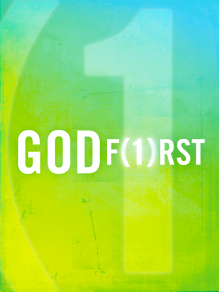
That brought to mind another quote by Eugene Peterson. It is from the introduction to Genesis in the Message, "First, God. God is the subject of life. God is foundational for living. If we don't have a sense of the primacy of God, we will never get it right, get life right, get our lives right. Not God at the margins; not God as an option; not God on the weekends. God at center and circumference; God first and last; God, God, God." Notice that application is embedded in this understanding - Peterson does connect our thoughts of God to our lives. We can't get them right unless we put God first. So, for all our emphasis on application and living the Christian life right, we are bound to get it wrong if that becomes the primary focus of living or even of reading God's Word.
So instead of K.I.S.S., I'm encouraging us to K.I.A.G. - Keep it about God. Doesn't quite have the same ring, I know, but I'm not one for acronyms anyway.
 On of the big problems (as I see it) is that we are often forced to begin with wrong questions of the text because of our overemphasis on relevance and application. Yes, I mean overemphasis. We begin with the standard, 'what does the text say, what does it mean, how does it apply to my life'. The problem is that makes us more important in than God. Marva Dawn writes, "We can too naturally tend toward asking what the text says and means for our benefit instead of what is says about God and how its purpose is to draw us into worship...Before we ask how such an account [the Exodus] might pertain to our own lives, then, let's be sure to examine deeply what God does and what the text reveals about God's character."
That brought to mind another quote by Eugene Peterson. It is from the introduction to Genesis in the Message, "First, God. God is the subject of life. God is foundational for living. If we don't have a sense of the primacy of God, we will never get it right, get life right, get our lives right. Not God at the margins; not God as an option; not God on the weekends. God at center and circumference; God first and last; God, God, God." Notice that application is embedded in this understanding - Peterson does connect our thoughts of God to our lives. We can't get them right unless we put God first. So, for all our emphasis on application and living the Christian life right, we are bound to get it wrong if that becomes the primary focus of living or even of reading God's Word.
So instead of K.I.S.S., I'm encouraging us to K.I.A.G. - Keep it about God. Doesn't quite have the same ring, I know, but I'm not one for acronyms anyway.
Subscribe to:
Comments (Atom)