Pages

Saturday, November 12, 2005

Rasputin


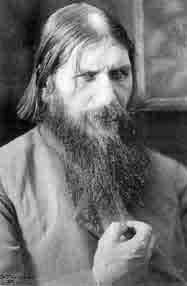
Sunday night I mentioned a guy named Rasputin. Take a look. Real pretty hugh. What is worse than his outward appearance is his wicked heart. He was highly controversial and influential monk in St. Petersburg during the early part of the 20th century. He had a small but pivotal role in the fall of the Romanov dyansty and the victory of the Bolsheviks which led to the formation of the Soviet Union.

Ok, so enough of the history lesson. Why bring him up again...

Rasputin taught that one of the keys to holiness was to sin, a lot. He held that, since those who sin the most require the most forgiveness, a sinner who continues to sin with abandon enjoys, each time he repents, more of  God's forgiving grace than an ordinary sinner (FF Bruce). Sounds way out there, doesn't it.

Apparently not though, because Paul anticipated Rasputins heresy long before Rasputin was a blight to Russian history. Paul says in Romans 6:1-4 "What shall we say then? Are we to continue in sin that grace may abound? 2 By no means! How can we who died to sin still live in it? 3 Do you not know that all of us who have been baptized into Christ Jesus were baptized into his death? 4 We were buried therefore with him by baptism into death, in order that, just as Christ was raised from the
dead by the glory of the Father, we too might walk in newness of life" ESV

While we experience God's grace in forgiveness, we may not presume upon it by sinning with such a cavalier attitude. Moreover, Rasputin neglects to understand that living a righteous life can only be done by God's grace. Want to see grace abound? Then abound in good works which God has graciously prepared ahead of time for us to do!

Wednesday, November 02, 2005

The Difficult Doctrine of the Love of God

When we think of the love of God, we generally don't think of it as a difficult doctrine. Whe we think of God's sovereignty or wrath we do, but not his love. The title of this blog is stolen from an incredible little book by DA Carson. In it, he explores briefly five ways in which the Bible speaks of the love of God...

First, Carson points out that there has been an eternal love within the Godhead. The Father has eternally loved the Son. The Son has eternally loved the Father. I think this is actually essential to understanding the statement "God is love". If God had eternally existed in singularity instead of plurality, then he would have had no object to love, at least not in any kind of reciprical relationship. He would have then needed to create out of some deficiency - he would have needed to create so that he could be in relationship and express his love. This is not, however, the case. He dwelled for an eternity in relationship with himself, in Trinity. And we was fine. He wasn't lonely or needy. So he didn't create out of lack, but out of overflow.

Secondly, Carson reminds us that the Bible speaks of God's providential love to all his creation. Matthew 6 gives us wonderful pictures of a loving Creator caring for his world in wonderful ways - clothing the lilies, feeding the birds, etc.

Third, there is a sense, Carson reminds us, in which God showed his love to the whole world through the gift of his Son, Jesus Christ. John 3:16 says that "God so loved the world, that he gave his only son". This is the most incredible display of love ever made. In fact, as Bob mentioned, we can't fully know what love is apart from knowing this love.
Fourth, there is a strong, chosing, saving love that God shows for his elect. To those whom he has chosen, he has not just made the offer of salvation, but has actually saved them - not because they were great or worthy, but out of his grace and love (Deuteronomy 7:7-8). At this point some may object to the discriminating nature of God's love - he loves whom he wants to. But, let me argue that we should allow God the same freedoms with his love that we expect for ourselves - the freedom to love people in different ways. I certainly love my sister, but I also certainly love her differently than I love my wife (otherwise, it would just be weird and wrong!). God, as we have already said, loves his creation, all of it. Yet, it also true that God loves some people in particularly strong way, and acts on it by saving them.

Finally, the Bible does seem to teach that there is a kind of love that is conditioned upon obedience. Frankly, this one makes me the most uncomfortable, but it shouldn't. Will I ever be out of God's love? In one sense, no. I will never loose my salvation - I have experienced Gods saving loving and that will never be taken away. Yet, I can grow into deeper experiences of God's love as I committ to obey and walk daily with Christ, choosing him over the pleasures of sin. Jesus says in John 15 "if you obey my commands, you will remain in my love, just as I have obeyed the Father's commands and remain in his love".

So, as you see, the doctrine of the love of God isn't as simple as you might have thought. Yet I think because it isn't so simple, but complex, it is all the more beautiful.

Monday, October 31, 2005

A Small Topic?

Sunday night, Bob joked about me assigning him a small topic - the love of God. A couple of things need to be said. First, in my defense, I laid out the topics and dates, he picked the date. Not my fault Bob! Second, he's absolutely right - God's love is so vast and beyond us the topic is immense, and daunting. Paul speaks of it as being unknowable. Listen to what he says in Ephesians 3...
Ephesians 3:14-19
"For this reason I bow my knees before the Father, 15 from whom every family in heaven and on earth is named, 16 that according to the riches of his glory he may grant you to be strengthened with power through his Spirit in your inner being, 17 so that Christ may dwell in your hearts through faith — that you, being rooted and grounded in love, 18 may have strength to comprehend with all the saints what is the breadth and length and height and depth, 19 and to know the love of Christ that surpasses knowledge, that you may be filled with all the fullness of God." ESV

To me, this is incredible. What gets me is this: look at verses 18-19 again. Paul is asking that out of the riches of God's glory, he would give us strength to comprehend his love, the vastness of it. He is asking that God would give us strength to know the love of Christ "that surpasses knowledge". In other words, on my interpretation, we need an experience of God's love - him strengthening us - to know God's love. Apart from his showing us his love in strengthening us know it, his love in Christ would be unknowable.

I needed to hear Bob's message on Sunday night to be reminded of someing that sounds so simple, and yet is one of the most shocking and perplexing things - God loves me. Not with a warm, fuzzy, sentimental love. But with a fierce, faithful, saving, strong love - a love that will not let me go, a love that surrounds me and hems me in, a love that pursued me, a love that died for me, in fact, a love that sent his Son to die for me.

There is a story about a man named Karl Barth that I love. Dr. Barth was one of the most brilliant and complex intellectuals of the twentieth century. He wrote volume after massive volume on the meaning of life and faith. A reporter once asked Dr. Barth if he could summarize what he had said in all those volumes. Dr. Barth thought for a moment and then said: "Jesus loves me, this I know, for the Bible tells me so."

Thursday, October 20, 2005

Christ's Authority

Today I was reading through Luke 4 and was struck by the pictures we get of Christ's authority. I was tempted to keep reading, but felt that I needed to stop and think more about this. At the end of Matthew he says "all authority has been given to me". But what does it mean to say that Jesus has authority?

When we talk about authority, there are at least two ways we use the word. For example, Dick Vitale is an authority on college basketball. We know what we mean when we say that. We don't mean that he has the power to enforce anything, but that he is recognized as an expert in this field - he has the final word so to speak. But when we speak of police authority, or the authority of the courts, we mean something entirely different. We aren't referring to their expertise, but to their power to enforce their decisions, the law, etc.

What kind of authority does Jesus have? The answer is both. He is the final word on any and every subject and he has the authority to enforce his and his Father's will.

In Luke 4 we see Jesus teaching (v.14-15; 16-27). Jesus takes a scroll of Isaiah and reads in the synagogue and interprets it to refer to himself and his ministry. He does it with authority - he is the final word on it. In fact, in verse 32 Jesus was teaching again and it says the crowds were astonished because he taught with such authority (He said definitively, this is what it means, this is what you ought to do, instead of this is what Rabbi so and so said and this is how so and so applies this).

But Jesus also shows the other kind of authority. Throughout the chapter he command demons to come out of people - AND THEY DO. He commands a fever to leave Peters mother in law, AND IT DOES. He shows authority over disease and sickenss as well. I think the beginning of the chapter is kinda funny in light of this. Satan comes and tempts Jesus saying he will give him authority over the kingdoms of this world if Jesus would just worship him. Kinda funny cause Jesus already had it, and had authority even over Satan himself.

What does this mean for you and me? Well first, it means I am compelled to believe Jesus. What he says is true, definitive, and authoritative. What Jesus says is good, is good. What he says is harmful to me, what he says will lead to misery or destruction - I better believe it. His word is true. But more than that, if I disobey and disbelieve, I am flaunting my sin in the face of someone who has authority to enforce his will and punish those who resist. My mind goes to Philippians 2 where it says that "every knee will bow, in heaven and on earth and under the earth, and every tongue confess that Jesus Christ is Lord, to the glory of God" (even the phrase here Lord carries the conotation of authority!). Everyone will recognize and bow to the authority of Christ. Better willingly now than by compulsion later.

Reaching the Nations

This past Sunday Larry Lyman challenged us to finish the job begun by giants like Wycliffe and Tyndale - the job of bringing the word of God to every tribe and language on the planet. The job is huge, but so are the promises of God...

For example, this morning I was reading Psalms 86. Read verses 8-9, "There is none like you among the gods, O Lord, nor are there any works like yours. All the nations you have made shall come and worship before you, O Lord, and shall glorify your name."

Does that do anything in you. It does to me. First, it a reminder that there is no God like our God. That's been the theme of the whole semester! Secondly, it calls to memory all the great things God has done - things as huge as creation, redemption, the building of a global community of faith, and the what he is doing in my life personally (I am his workmanship, as are you). This should raise in us an overwhelming sense of gratitude. Next, it gives us hope, rock solid confidence, that all the endeavors of Christ's church and all the labors of missionaries throughout the ages have not been in vain - All nations shall come and worship and glorify God's name. The scene, a scene repeated in Revelation 7, gives me hope, energy, fuels my prayers, and excites and stirs something deep in my soul.

I admire and am thankful to God for men like Larry Lyman, and I pray that God would raise up more giants even from among our community of faith.