
It Is Finished (Beat The System Album Version) - Petra
Grave Robber - Petra
Coloring Song, The - Petra
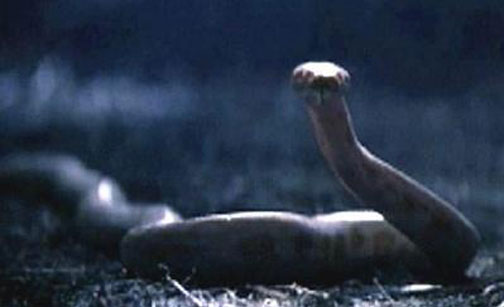 After the first week's focus on the story of creation, we moved on this week to the story of the fall. We read together Genesis 3:1-7, Gen 3:8-13, and then Gen 3:14-24. After the first section we spoke of how Adam and Eve's is really a lack of trust in God - they didn't trust he was being good to them and believed the lie that he was holding out. When we prayed that night I spoke of 'our rebellion' and 'our lack of trust' and 'our disobedience'. I was hoping the kids would pick up on that, and Caleb didn't disappoint. He immediately asked, 'why did you say we/us/our when it was Adam who sinned?' I didn't answer that question but put him off for a few days. After the second section (Tues) we talked a lot about how we try to blame other people or things for our sin. This was a really good discussion. The third section led to Christ and how in the midst of God pronouncing judgment, he also offers good news - the seed of Eve will crush the head of the serpent. I showed them the beginning clip to the Passion of Christ (found it on YouTube) and we discussed how Christ was wounded but crushed the work and person of Satan on the cross.
 First, the section I quoted comes as Frame is discussing the cultural mandate as it comes to Adam in Genesis 1:28. In this discussion, Frame traces the historical development of the cultural mandate. He reminds us that "The first human experience recorded in Scripture is the experience of hearing this command...It defines the purpose of human life". The section I quoted comes in this context - the context of prefall man. Consequently, when Frame speaks of using creation to 'serve their own purposes', it is still in the context of man in right relationship with God. He makes that explicit in the paragraph that follows the quote I provided. He writes, "God gave this command to Adam and Eve for the same reason, ultimately, that he does everything else: for his own glory... Adam was not to rule merely for himself, but for God, glorifying God in all he did."
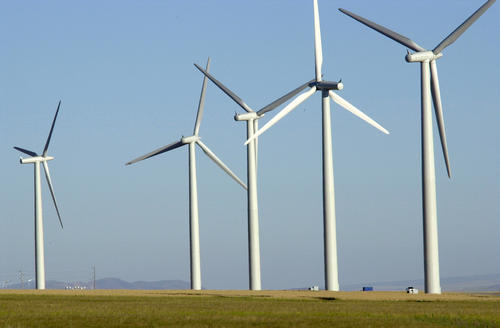 "There are two elements [to the cultural mandate of Genesis 1:28]: filling and ruling...As they fill the world, they are to rule it. They are not to be terrified by the natural world...Rather, they are to march through the world as kings and queens, taking possession of everything. They are to harness the animals, the heat and cold, the electricity and seismic energy, to serve their own purposes. That means development. Adam and Eve are not to leave the world untouched, as some radical environmentalists would prefer. Rather, they are to use the resources of God's creation, to bring out the potential of the heavens and the earth, to facilitate their rule under God. They are to turn the creation into a culture, into a home for human society.