Pages

Tuesday, December 07, 2010

A Conference I'll be Skipping

Just ran across this:

Providential History Festival Promo from ProvHistory on Vimeo.

Nope, don't think I'll be attending. Besides the hokeyness of it, it's promoted by the Chalcedon foundation - a "Christian educational organization devoted to research, publishing, and promoting Christian reconstruction in all areas of life." Sound good, but not so much. Here's a little more (from Wikipedia - not always the best source, to be sure):

"In presenting a theonomic view of biblical law, the foundation is often referred to as promoting theocracy and dominionism. According to the group's web site:

We believe that the whole Word of God must be applied to all of life. It is not only our duty as individuals, families and churches to be Christian, but it is also the duty of the state, the school, the arts and sciences, law, economics, and every other sphere to be under Christ the King. Nothing is exempt from His dominion. We must live by His Word, not our own.

The Chalcedon Foundation has been listed as a hate group by the Southern Poverty Law Center."

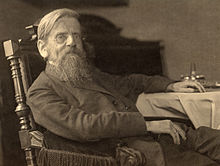
Certainly Rushdoony, the founder, held pretty strong racist views. Besides that, he looks like Count Dooku!


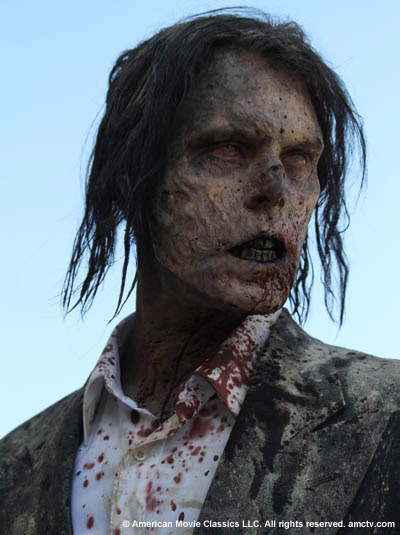
<- Rushdoony :: Count Dooku ->

Zombies are on the Move

My favorite TV show this fall has been AMC's The Walking Dead - which probably means it will only last a season or two. Thanks Doug for telling me about it.

Russell Moore writes a blog on Christian Ethics that I frequent. This past week he posted about why zombies are making a comeback in American entertainment, engaging with an article in the Times, My Zombie, Myself: Why Modern Life Feels Rather Undead, by Chuck Klosterman. Klosterman contends,

"The main truth about zombies, he argues, is that zombies, dead as they are, keep coming. As soon as you “kill” one dead man, there’s another right behind him. “In other words, zombie killing is philosophically similar to reading and deleting 400 work emails on a Monday morning or filling out paperwork that only generates more paperwork, or following Twitter gossip out of obligation, or performing tedious tasks in which the only true risk is being consumed by the avalanche.”

Moore goes beyond Klosterman,

"I think there’s more to it than Klosterman’s technological overload scenario. The zombie represents what it means to feel dead and yet unable to stop living. That’s, at root, a spiritual condition before it’s a sociological one. Those familiar with the Christian story know that the primal human sin brought about the sentence of death. What we don’t often note is that this death penalty was itself radically gracious. After joining the serpent in his insurrection against God, the man and the woman were spiritually cut off from the life of God. They were dead. God exiled them from the Garden of Eden not because he was spiteful toward them, but to get them away from his appointed means of their ongoing life, the Tree of Life. God sent the sinful humanity out of the sanctuary “lest he reach out his hand and take also of the tree of life and eat, and live forever” (Gen. 3:22)."

The whole thing is worth a read. Oh, and a note on the pic - I couldn't find a good zombie pic, so I found one of Lynn's ex-boyfriend. Remarkable resemblance!

Monday, December 06, 2010

Sunday, December 05, 2010

Great Day in History

Today is a great day in US History - a day that marks the reversal of a great wrong set right. Thank you Utah for your vote!

Thursday, December 02, 2010

Guarding our Faith or Being Faithless

I have sometimes considered theological studies at a liberal or secular institution like IU or Yale, but have always stayed with more evangelical institutions (Houghton, TEDS, Covenant). Part of it was wanting to be fed and to grow spiritually through my educational pursuits and the other part is not wanting to fight my way uphill all the time as a theological conservative (relatively speaking). I wonder, though, if part of the reason is fear - wanting to guard and protect my faith.

Last night I took a break from reading John Williamson Nevin (an obscure American theologian) to read a biography of Adolf Schlatter (Adolf Schlatter: A Biography of Germany's Premier Biblical Theologian) (an obscure German theologian). I was struck by the decision making process that led Schlatter into theological studies as a University student. At first Schlatter steered clear of theological studies, arguing "Theological study is dangerous and could easily shake one's faith." Of course, German theological study was mainly of the highly critical nature, so his concern was legitimate. However, his sister was of a different opinion. She argued that to avoid theological studies for this reason was cowardly and faithless.

Schlatter eventually changed his mind and pursued theological studies, concluding that "if I avoided theological study out of fear I would not be preserving my faith but actually giving it up." Again, "I came to the conclusion that avoiding theological study to preserve faith was rank hypocrisy, and this conclusion brought decisive consequences." His biographer goes on to write that Schlatter's anxieties were not without foundation, and his studies did bring him to a crisis of faith where he even doubted the existence of God. However, "he also insisted that to act solely on the basis of this anxiety would not be an act 'from faith' because it would fail to take account of the capacity of God's preserving grace."

I understand Schlatter; yet, I think there's another truth that we must hold in tension with this. There seems to be plenty of encouragement from Scripture to 'guard your heart', to protect oneself from false teaching, etc. There is a 'garbage in, garbage out' dynamic to be on guard against.

How do you balance these two seemingly conflicting calls - the call to guard oneself vs. the call to have faith in God's ability to preserve our faith? I don't know, but it seems like a healthy dose of honest, self evaluation is important. I think it would have been unwise for me to have sat under and allow myself to be taugh by liberal/secular theologians during my undergraduate years. I had more biblical/theological training than most undergrad having grown up in a pastors home. However, it wasn't of the kind that exposed me to critical objections to the Bible and to the Christian faith. I would have been unprepared to handle them. At the same time, now, I think it would be faithless to steer away from such interactions simply out of fear of losing faith (though the fear of doing the work and not being granted a degree because of a conservative outlook is very real).

Here again, in this tension, we run headlong into the tension between God's sovereignty in preserving us and the call upon us to keep the faith and not allow ourselves to be shipwrecked. I don't think there is an easy way to remove the tension, and I think the Bible is intentional on that.